
How Do You Choose the Right Collar Interlining for a Shirt?
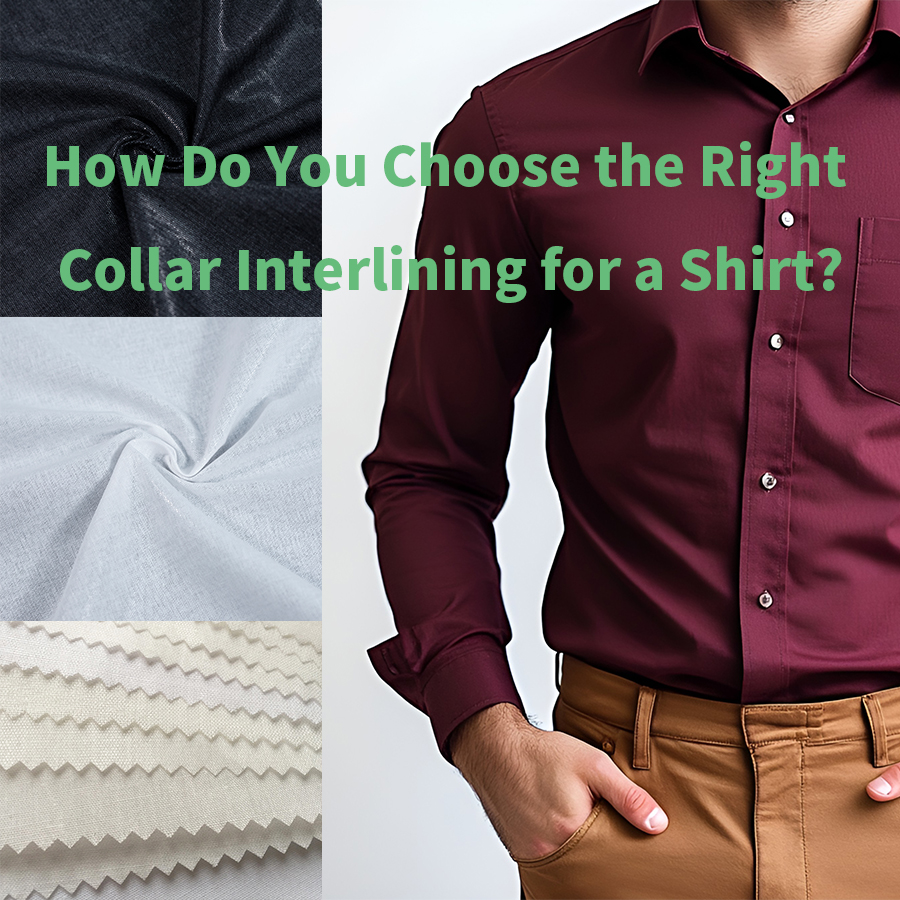
Collar interlining is a small component with a big job: it gives collars, cuffs, and plackets their shape, stability, and hand feel. Choose the wrong interlining and the collar may wrinkle, bubble after washing, or lose shape after a few wears. Pick the right one and the garment will look neat, press well, and hold up through daily use. This article explains the common types, how they’re made, and practical tips for selecting the best option for different shirt styles.
What Does Collar Interlining Do?
Collar interlining sits between the shell fabric and the facing (or under-collar). Its purpose is simple but crucial: provide structure where fabric alone is too soft or limp. For collars and cuffs, that means holding points and edges crisp; for plackets, it means keeping the front of the shirt flat and neat when buttoned.
A good interlining should:
-
keep shape after washing and ironing,
-
not feel scratchy against skin, and
-
bond cleanly to the shell fabric if it is fusible.
What Types of Collar Interlining Are Available?
Fusible Nonwoven Interlining
Most common in volume production. A heat-activated adhesive on one side bonds the interlining to the fabric when pressed. Benefits include consistent adhesion and faster sewing operations. Choose glue weight and glue pattern to match delicate, medium, or heavy fabrics.
Sewn-In (Non-Fusible) Interlining
Used when heat or adhesives would damage the fabric, or when the garment requires a softer drape. Sewn-in interlinings are preferred for high-end tailoring or heat-sensitive materials.
Woven Interlining
Woven constructions feel more natural and can offer good resilience. They are often used when breathability and a cloth-like hand are priorities.
Knitted Interlining
Knitted varieties give stretch and recovery, useful for casual styles or shirts that use stretch fabrics.
What Material Options Exist?
-
Cotton blends: breathable, comfortable next to skin — good for everyday shirts.
-
Polyester / PET: stable and resilient; choose carefully if you need breathability.
-
Polyester-cotton blends: a compromise between resilience and comfort.
-
Hot-melt film / adhesive-backed options: used in fusible interlinings to create a stable bond.
Which Factors Should Guide Your Choice?
Fabric Type
Lightweight cotton voile needs a light, flexible interlining. A heavy twill or oxford requires a firmer type to support the structure.
Collar Style
A stiff, structured point collar needs higher firmness; a soft, band-style collar benefits from lighter, more flexible interlining.
Care and Washing
If the shirt will be laundered frequently or industrially washed, choose interlinings and adhesives rated for repeated wash cycles and heat.
Comfort
Collars touch neck skin—select breathable, non-irritating materials for warm-weather shirts or high-contact designs.
Sewability and Production Needs
Fusible interlinings speed up assembly but require precise fusing parameters. Sewn-in options add sewing time but avoid heat/adhesive issues.
How Is Fusible Collar Interlining Applied Properly?
-
Match adhesive melting point to fabric — too high and the fabric may scorch; too low and the bond will be weak.
-
Control fusing temperature, pressure, and dwell time — consistent parameters prevent bubbling and delamination.
-
Test on fabric swatches before full production runs, especially for prints, thin fabrics, or performance finishes (e.g., water-repellent treatments).
-
Allow proper cooling and conditioning after fusing before sewing—this helps adhesives set evenly.
Common Problems and How to Avoid Them
-
Bubbling after wash: usually caused by mismatched adhesive or improper fusing. Solution: re-evaluate adhesive pattern and fusing settings; consider sewn-in interlining for heat-sensitive fabrics.
-
Stiff or harsh collar feel: choose a softer interlining or a finer fiber construction.
-
Delamination: test adhesive compatibility and washing resistance; request lab reports from suppliers.
-
Edge hardness or visible ridge at collar edge: reduce interlining thickness or use tapered interlining near points.
FAQ
Q1: Can one interlining work for both collars and cuffs?
Often yes, but cuffs usually endure more abrasion and repeated folding—choose a slightly stronger option for cuffs if durability is a concern.
Q2: Are fusible interlinings suitable for all shirt fabrics?
No. Heat-sensitive fabrics, some high-performance finishes, or very delicate fabrics may be better with sewn-in interlining.
Q3: How do I test interlining before bulk use?
Fuse a swatch, wash it several cycles under the intended care conditions, iron, and inspect for bubbling, shrinkage, or loss of hand.
Q4: Does interlining affect tailoring/pressing performance?
Yes. The right interlining should press well, hold creases for collars, and not become brittle over time.
Why Choose Shanghai Uneed Textile Co., Ltd.?
-
Proven product testing — we provide adhesion, shrinkage, and wash-resistance reports for each interlining type.
-
Wide range of specs — lightweight to heavy-weight interlinings, fusible patterns, woven and knitted options.
-
Production support — guidance on fusing temperature, pressure, and dwell-time to fit your fabric.
-
Custom solutions — tailor glue weight, GSM, and tapering to suit collar points, cuffs, or plackets.
-
Export & compliance — stable export experience, necessary documentation, and quality control for global shipments.
continue reading
Related Posts

Shirt collar interlining helps a collar keep its shape, stiffness, and smooth appearance. This article explains the types, materials, and how to choose the right shirt collar interlining.
-
This article explains cotton interlining, its structure, properties, and why it is mainly used in shirt and collar interlining applications.
-
This article explains how to use fusible interlining correctly, including preparation, fusing steps, common mistakes, and practical tips.
.png)