
How Does Fusing Interlining Improve Garment Structure?
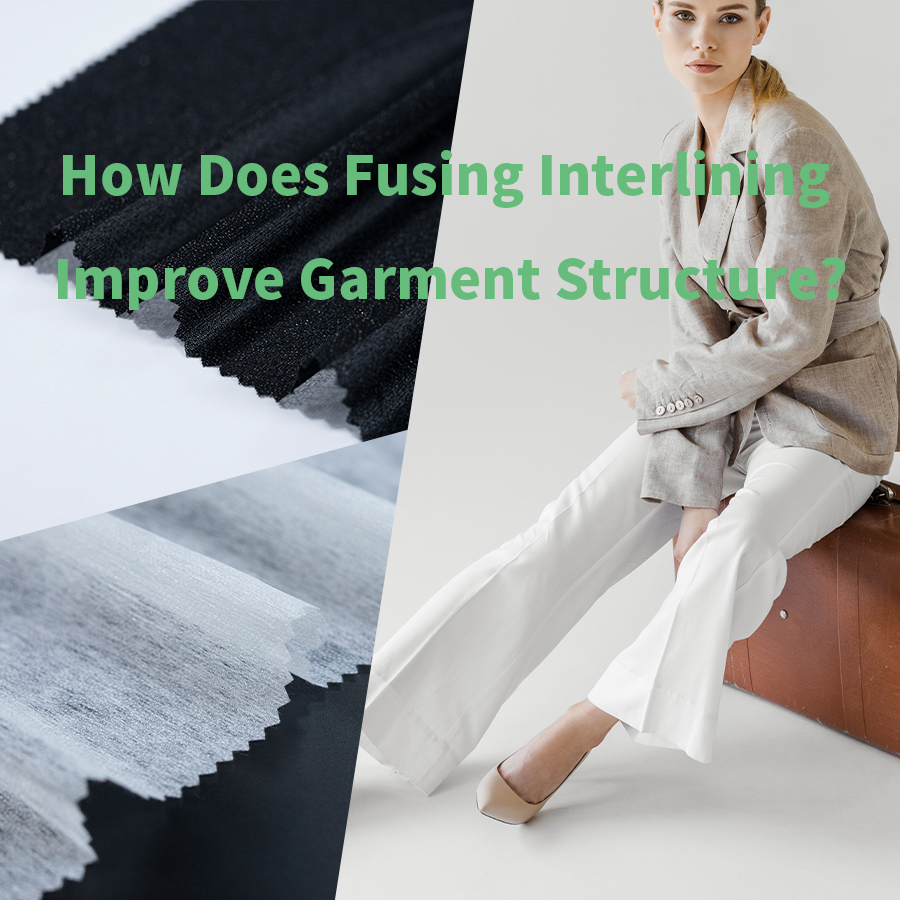
Fusing interlining is one of the most widely used materials in modern garment production. It helps fabrics keep their shape, improves appearance, and simplifies manufacturing. From shirts to jackets, fusing interlining plays a key role in both quality and efficiency.
This article explains how fusing interlining works, what types are available, where it’s used, and what to pay attention to during production.
What Is Fusing Interlining?
Fusing interlining is an interlining with a heat-activated adhesive on one side. When heat and pressure are applied, the adhesive melts and bonds the interlining to the outer fabric.
Compared with sew-in interlining, fusing interlining:
-
Saves production time
-
Improves consistency
-
Reduces manual labor
That’s why it’s widely used in mass garment manufacturing.
How Does the Fusing Process Work?
The fusing process usually includes four steps:
-
Place the adhesive side against the fabric
-
Apply heat and pressure with a fusing machine
-
The adhesive melts and bonds the layers
-
Cooling fixes the bond
Correct temperature, pressure, and time are all important for good results.
Common Types of Fusing Interlining
Fusing interlining can be classified by structure and material.
Woven Fusible Interlining
-
Strong structure
-
Clear fabric direction
-
Used in shirts, jackets, and formal garments
Nonwoven Fusible Interlining
-
Easy to cut
-
No grain direction
-
Widely used in shirts and casual wear
Knitted Fusible Interlining
-
Soft and flexible
-
Suitable for stretch fabrics
-
Used in fashion and comfort-focused garments
Adhesive Types Used in Fusing Interlining
Different adhesives affect bonding strength and performance.
PA (Polyamide)
-
Strong adhesion
-
Good wash resistance
-
Very common in garment interlining
PES (Polyester)
-
High heat resistance
-
Stable bonding
-
Used in durable garments
EVA
-
Low melting point
-
Soft hand feel
-
Suitable for lightweight fabrics
TPU
-
Elastic bonding
-
Used for stretch garments
Where Is Fusing Interlining Used?
Shirt Production
Used in collars, cuffs, plackets, and front panels.
Jackets and Coats
Helps lapels and fronts keep shape.
Trousers and Skirts
Used in waistbands and structured areas.
Fashion and Casual Wear
Provides shape without heavy stiffness.
Advantages of Fusing Interlining
Production Efficiency
Speeds up garment manufacturing.
Consistent Quality
Reduces variation caused by manual sewing.
Clean Appearance
Helps garments look neat and well-shaped.
Flexible Selection
Available in many weights and structures.
Common Fusing Problems and Solutions
Bubbling
Often caused by incorrect temperature or pressure.
Poor Bonding
May result from low adhesive quality or short fusing time.
Hard Hand Feel
Interlining too heavy for the fabric.
Shrinkage Issues
Interlining and fabric not compatible.
Most issues can be avoided through testing.
Tips for Better Fusing Results
-
Always test before bulk production
-
Match interlining weight with fabric
-
Use correct fusing machine settings
-
Allow proper cooling after fusing
Small adjustments often make a big difference.
FAQ
Q1: Is fusible interlining washable?
Yes, when properly fused, it performs well in washing.
Q2: Can fusible interlining replace sew-in interlining?
In most garments, yes, but tailored garments may still use sew-in types.
Q3: Does fusible affect fabric softness?
It depends on interlining weight and adhesive type.
Q4: Is testing really necessary?
Yes, testing helps prevent production problems.
Why Choose Shanghai Uneed Textile Co., Ltd.?
-
Complete Interlining Range
Woven, nonwoven, knitted, and specialty fusible interlinings. -
Adhesive Expertise
PA, PES, EVA, and TPU coating options. -
Stable Quality Control
Bonding strength and shrinkage testing. -
Production-Oriented Support
Advice based on real factory conditions. -
Reliable Export Experience
Consistent supply and professional communication.
continue reading
Related Posts

Shirt collar interlining helps a collar keep its shape, stiffness, and smooth appearance. This article explains the types, materials, and how to choose the right shirt collar interlining.
-
This article explains cotton interlining, its structure, properties, and why it is mainly used in shirt and collar interlining applications.
-
This article explains how to use fusible interlining correctly, including preparation, fusing steps, common mistakes, and practical tips.
.png)