
How to Use Fusible Interlining?
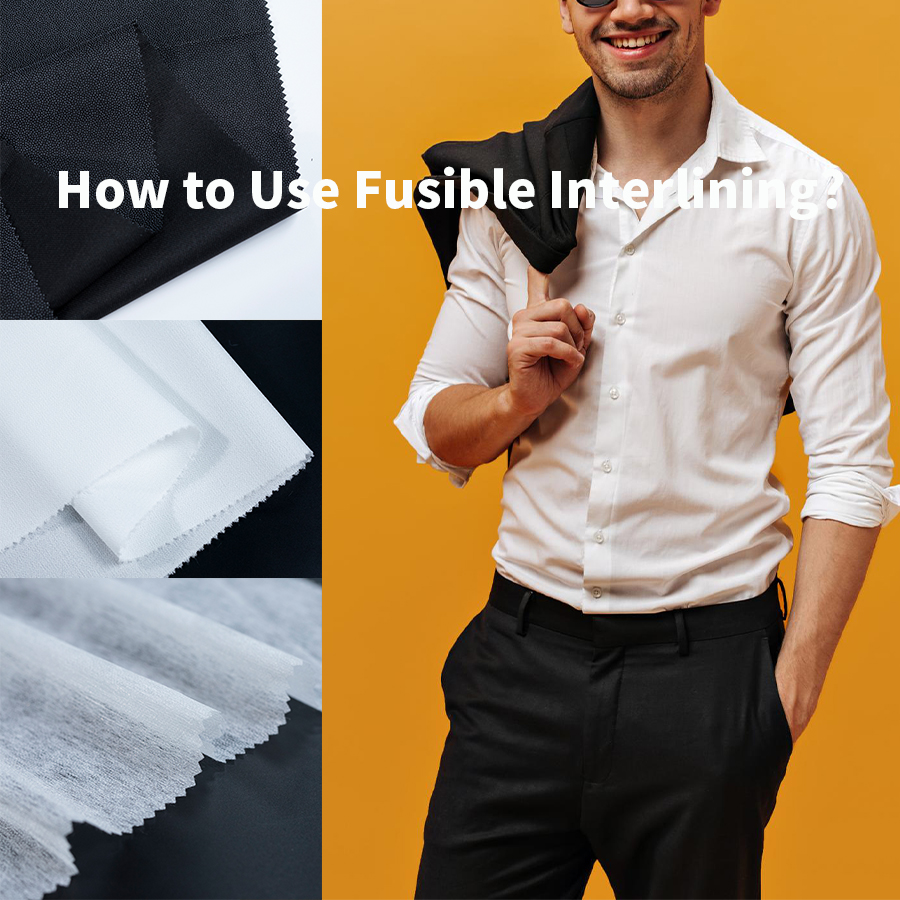
What Is Fusible Interlining?
Fusible interlining is an interlining with a heat-activated adhesive coating on one side. When heat and pressure are applied, the adhesive melts and bonds the interlining to the outer fabric.
It is widely used in modern garment production because it:
-
Saves sewing time
-
Improves production efficiency
-
Provides stable shape support
However, correct usage matters a lot. Even good interlining can fail if fused incorrectly.
What You Should Prepare Before Fusing
Before starting the fusing process, a few basic checks can prevent many problems later.
Check the Fabric and Interlining Compatibility
Not all interlinings work well with all fabrics. You should confirm:
-
Fabric composition (cotton, polyester, blends, stretch)
-
Fabric heat resistance
-
Interlining coating type (PA, PES, EVA, etc.)
Pre-Test Is Always Recommended
Always do a small sample test before bulk production to check:
-
Bonding strength
-
Fabric appearance
-
Shrinkage after washing
Step-by-Step: How to Use Fusible Interlining
Step 1: Identify the Adhesive Side
The adhesive side usually feels rough or slightly grainy.
Place this side against the wrong side of the fabric.
Step 2: Set the Correct Temperature
Different coatings require different temperatures.
| Coating Type | Typical Fusing Temperature | Notes |
|---|---|---|
| PA | 130–150°C | Strong bonding, widely used |
| PES | 150–170°C | Higher heat resistance |
| EVA | 110–130°C | Softer bonding |
| TPU | 120–140°C | Elastic applications |
Always follow supplier recommendations and fabric limits.
Step 3: Apply Pressure Evenly
Use a fusing press or iron to apply:
-
Even pressure
-
Stable temperature
-
Full surface contact
Uneven pressure can cause partial bonding or bubbling.
Step 4: Control Time
Typical fusing time ranges from 10–20 seconds, depending on:
-
Fabric thickness
-
Interlining weight
-
Coating type
Too short → weak bonding
Too long → fabric damage
Step 5: Cooling and Setting
After fusing, let the fabric cool naturally on a flat surface.
Do not move or stretch the fabric immediately, as this may weaken bonding.
Common Problems and How to Avoid Them
Bubbling
Usually caused by:
-
Temperature too low
-
Insufficient pressure
-
Fabric shrinkage
Solution: adjust temperature and test pre-shrunk fabrics.
Poor Bonding Strength
Often due to:
-
Wrong coating selection
-
Short fusing time
Solution: change coating type or extend fusing time slightly.
Fabric Shine or Damage
Usually caused by:
-
Excessive heat
-
Direct iron contact
Solution: use a pressing cloth or lower temperature.
Where Is Fusible Interlining Commonly Used?
Fusible interlining is widely applied in:
-
Shirt collars and cuffs
-
Plackets
-
Jacket fronts
-
Waistbands
-
Blouses and dresses
It is suitable for both woven and nonwoven interlining types.
How to Choose the Right Fusible Interlining for Easy Use
To make fusing easier and more stable, buyers usually consider:
-
Matching interlining stiffness with fabric weight
-
Choosing correct adhesive coating
-
Checking washing requirements
-
Confirming production equipment conditions
Correct selection reduces rework and quality complaints.
FAQ
Can fusible interlining be used with an iron instead of a press?
Yes, for small-scale production. Industrial presses are recommended for consistency.
Does fusible interlining work on stretch fabrics?
Yes, but elastic or knitted interlining should be used.
Should fusible interlining be pre-shrunk?
High-quality interlining is usually pre-stabilized, but testing is advised.
Why does fusible interlining peel off after washing?
This is often caused by incorrect fusing temperature or incompatible coating.
Can fusible interlining be reused?
No. Once fused and removed, it cannot be reused.
Why Choose Us for Fusible Interlining
-
Wide range of fusible interlining options
-
Stable bonding performance
-
Support for fabric matching and testing
-
Competitive pricing for export markets
-
Experience working with global garment factories
Contact Us
If you would like to learn more about our interlining products or need support in choosing the right solution for your garments, feel free to contact us. Shanghai Uneed Textile Co., Ltd is always happy to discuss your requirements and provide professional suggestions.
TEL: +86-21-33608891
FAX: +86-21-33608892
Email: info@uneed-tex.com
continue reading
Related Posts

This article explains cotton interlining, its structure, properties, and why it is mainly used in shirt and collar interlining applications.
-
This article explains how to use fusible interlining correctly, including preparation, fusing steps, common mistakes, and practical tips.
-
This article explains bonded interlining, how it is made, its types, key features, applications, and how to choose the right option.
.png)