
Shirt Collar Interlining: What It Is and How to Choose the Right One
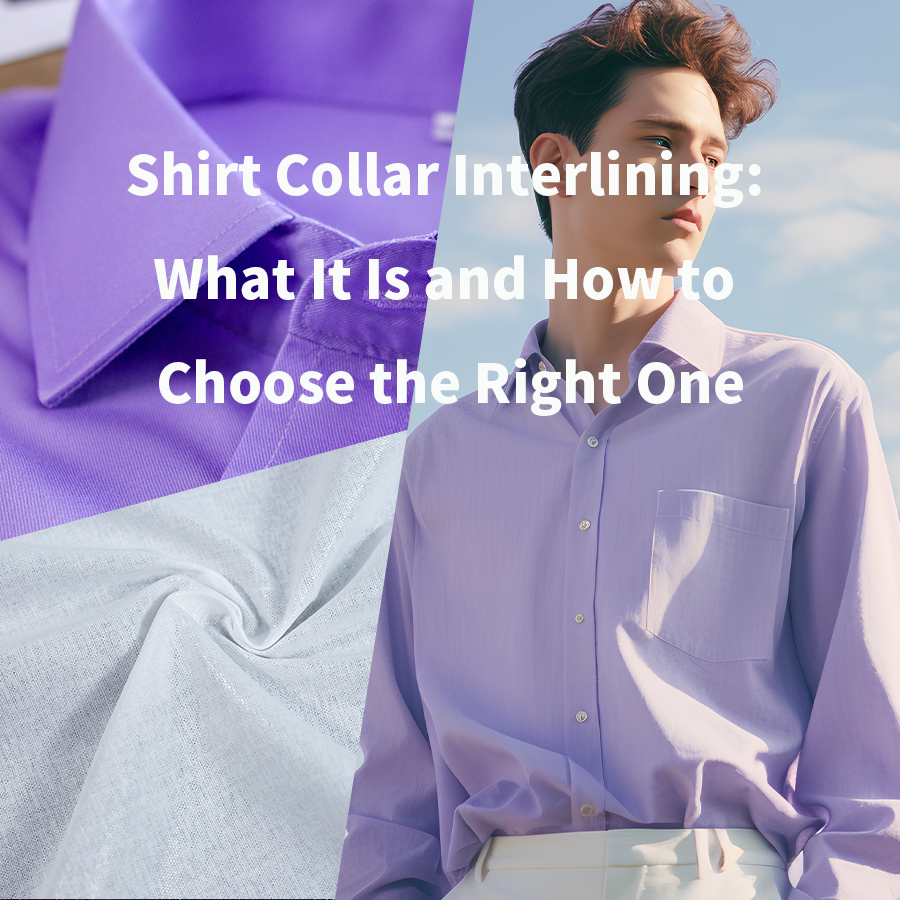
What Is Shirt Collar Interlining?
In shirt manufacturing, collar interlining is the material placed between the collar fabrics to help the collar keep its shape. It is usually fused or sewn between the outer fabric layers to give the collar structure and stability.
Most shirt collars rely on interlining, otherwise they can quickly become wrinkled or lose their structure after washing. Interlining helps the collar stay neat and maintain a clean outline when worn.
In most modern shirt production, fusible interlining is commonly used because it is efficient and stable during mass production.
Why Interlining Is Important for Shirt Collars
A collar is one of the most visible parts of a shirt. Even when the rest of the shirt looks good, a weak collar can affect the overall appearance.
Shirt collar interlining mainly provides the following benefits:
-
Shape retention – keeps the collar standing and structured
-
Wrinkle resistance – reduces deformation during washing and wearing
-
Better appearance – creates a clean and professional look
-
Fabric support – prevents the outer fabric from becoming too soft or floppy
Different markets prefer different collar stiffness. For example, formal shirts usually require firmer collars, while casual shirts often use softer interlining.
Common Materials Used for Shirt Collar Interlining
The material composition affects stiffness, durability, and comfort.
Cotton Interlining
Cotton interlining is commonly used in higher-quality shirts.
Advantages include:
-
Natural hand feel
-
Good breathability
-
Comfortable when touching the neck
Cotton interlining is often used in premium shirt collars where comfort and natural materials are preferred.
Polyester Interlining
Polyester is widely used because it offers:
-
Good stability
-
Consistent quality
-
Lower production cost
Many mass-produced shirts use polyester-based fusible interlining.
Cotton–Polyester Blended Interlining
Blended materials combine the advantages of both fibers.
Typical benefits:
-
Better shape stability
-
Balanced softness and strength
-
More cost-efficient than pure cotton
Many shirt manufacturers choose this type because it works well for both mid-range and high-volume production.
Typical Structure of Shirt Collar Interlining
Shirt collar interlining can be produced in different fabric constructions.
| Interlining Type | Structure | Common Use |
|---|---|---|
| Woven Interlining | Traditional woven structure | High-quality dress shirts |
| Knitted Interlining | Stretchable knitted structure | Flexible or casual shirts |
| Nonwoven Interlining | Fiber bonded structure | Cost-effective shirt production |
Among these, woven fusible interlining is often preferred for dress shirts because it provides better shape and stability.
Fusible vs Sew-in Shirt Collar Interlining
Fusible Interlining
Fusible interlining has adhesive coating on one side. It is bonded to the fabric using heat and pressure.
Advantages:
-
Faster production
-
Stable bonding
-
Suitable for large-scale manufacturing
Most modern shirt factories use fusible interlining for collar production.
Sew-in Interlining
Sew-in interlining is stitched between fabric layers instead of fused.
Characteristics:
-
Used in traditional tailoring
-
Often seen in custom shirts
-
Requires more labor
Although less common in mass production, it is still used in some high-end garments.
Important Factors When Choosing Shirt Collar Interlining
Garment manufacturers usually consider several factors when selecting collar interlining.
Collar Style
Different collar designs require different stiffness levels.
For example:
-
Spread collars usually need firmer interlining
-
Casual collars often use softer materials
Fabric Weight
The interlining must match the weight of the shirt fabric.
Light fabric needs lighter interlining, otherwise the collar may feel too heavy or stiff.
Washing Performance
Shirt collars are frequently washed. Good interlining should:
-
Maintain bonding strength
-
Resist bubbling or delamination
-
Keep the collar flat after washing
Production Compatibility
The interlining must work well with the factory’s fusing machines and sewing process.
Stable adhesive performance is important to avoid production problems.
Typical Specifications for Shirt Collar Interlining
| Parameter | Common Range |
|---|---|
| Weight | 30–80 gsm |
| Coating Type | PA or PES adhesive |
| Structure | Woven, knitted, or nonwoven |
| Application | Shirt collars and cuffs |
Different shirt styles may require customized specifications.
FAQ
Is cotton interlining better for shirt collars?
Cotton interlining is often preferred for high-quality shirts because it feels natural and breathable. However, polyester blends can provide better stability and lower cost.
Can shirt collar interlining be washed repeatedly?
Yes. Good interlining is designed to withstand multiple washing cycles without losing bonding strength or causing bubbling.
What is the difference between collar interlining and cuff interlining?
They are often similar, but cuff interlining may require slightly different stiffness depending on the shirt design.
Why does collar bubbling happen after washing?
This usually occurs when the adhesive bonding is not strong enough or when the interlining is not compatible with the fabric.
What weight of interlining is best for dress shirts?
Most dress shirts use medium-weight woven fusible interlining to balance stiffness and comfort.
Can interlining affect collar comfort?
Yes. If the interlining is too stiff or too heavy, the collar may feel uncomfortable around the neck.
Contact Us
If you would like to learn more about our interlining products or need support in choosing the right solution for your garments, feel free to contact us. If you have any questions or product requirements, feel free to contact Shanghai Uneed Textile Co., Ltd. Our team will be glad to assist you.
TEL: +86-21-33608891
FAX: +86-21-33608892
Email: info@uneed-tex.com
continue reading
Related Posts

Shirt collar interlining helps a collar keep its shape, stiffness, and smooth appearance. This article explains the types, materials, and how to choose the right shirt collar interlining.
-
This article explains cotton interlining, its structure, properties, and why it is mainly used in shirt and collar interlining applications.
-
This article explains how to use fusible interlining correctly, including preparation, fusing steps, common mistakes, and practical tips.
.png)