
What Do You Need to Know About Nonwoven Fusible Interlining?
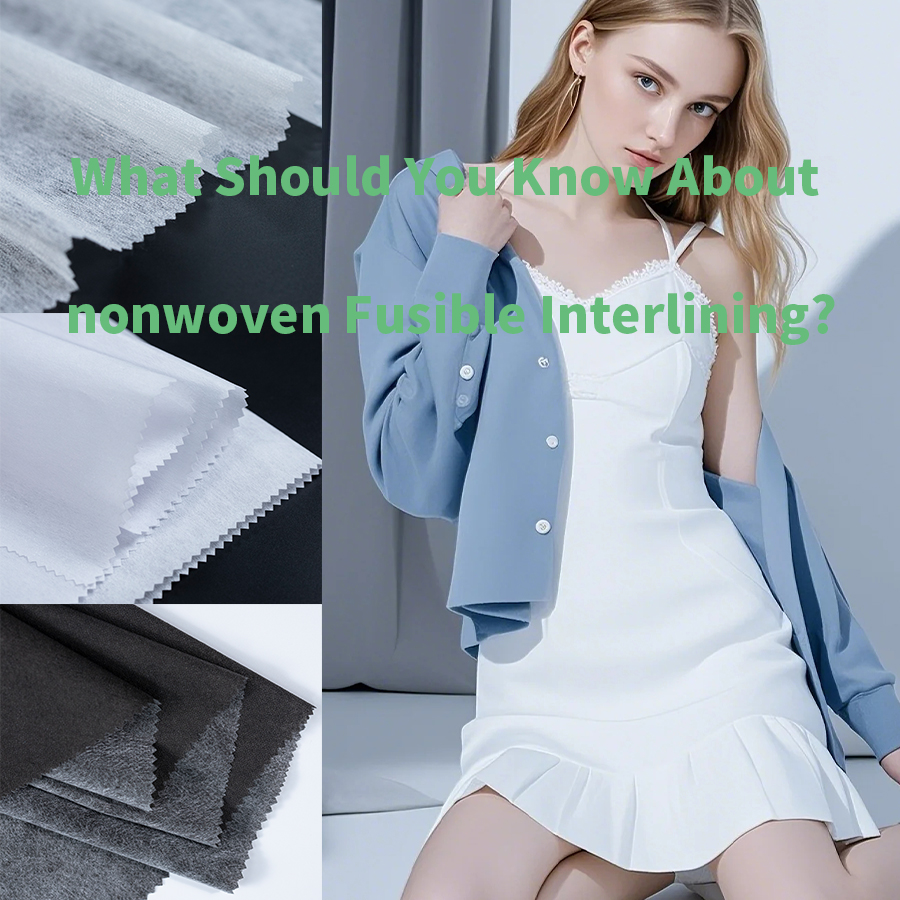
Nonwoven fusible interlining is one of the most commonly used interlinings in garment production. It’s popular because it’s easy to use, stable in quality, and suitable for many different types of clothing. Although it’s not visible in finished garments, it plays an important role in shape, comfort, and durability.
In this article, we’ll explain what nonwoven fusible interlining is, how it’s used, and what to look for when choosing it.
What Is Nonwoven Fusible Interlining?
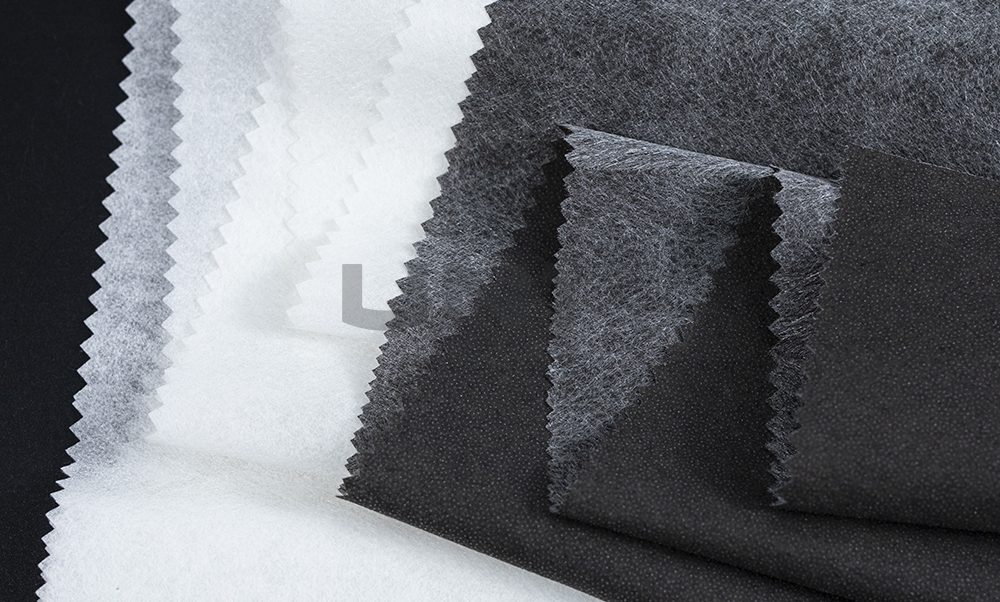
Nonwoven fusible interlining is made from fibers bonded together without weaving or knitting. One side is coated with adhesive, which allows it to bond to the outer fabric using heat and pressure.
Because it doesn’t have a warp or weft direction like woven fabric, it behaves more evenly in all directions. This makes it easy to handle during cutting and production.
Why Is Nonwoven Fusible Interlining Widely Used?
Easy to Cut and Use
There’s no grain direction to worry about, which reduces mistakes and saves time.
Stable Performance
It keeps its shape well and works consistently in mass production.
Cost-Effective
Compared with woven interlining, nonwoven options are usually more economical.
Wide Application Range
Suitable for many garment types, from shirts to casual wear.
Common Materials Used in Nonwoven Fusible Interlining
Polyester
Strong, durable, and resistant to shrinkage. Commonly used in everyday garments.
Viscose
Softer hand feel and better breathability. Often chosen for lightweight clothing.
Blended Fibers
Balance between softness and stability, suitable for a wide range of fabrics.
Different Types of Nonwoven Fusible Interlining
Nonwoven fusible interlining includes several different structures. Each type is designed for specific garment needs and production conditions.
Chemical Bond Nonwoven Interlining
This type is made by bonding fibers together using chemical binders. It offers good stability and is commonly used in shirts, casual wear, and basic garments. Chemical bond interlining is easy to fuse and suitable for high-volume production.
Thermal Bond Nonwoven Interlining
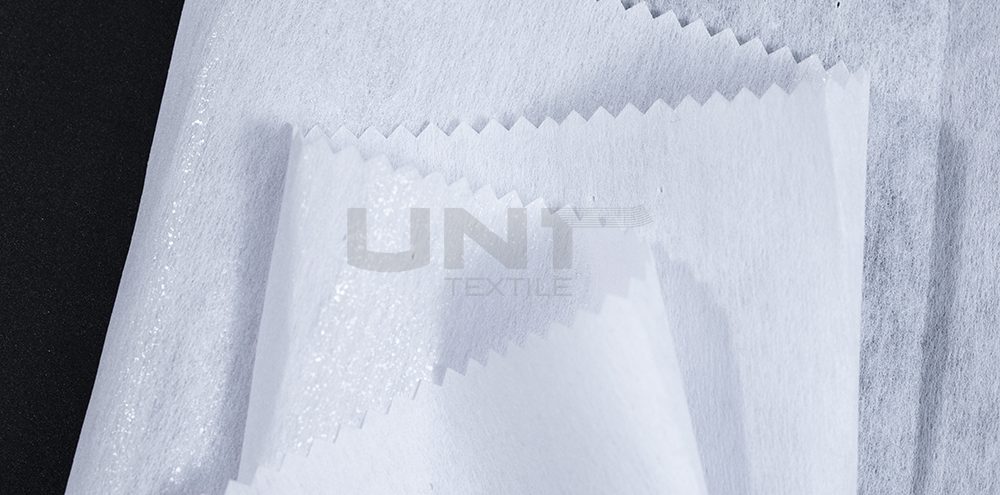
Thermal bond nonwoven interlining uses heat to bond fibers together. It has a cleaner structure and more consistent thickness. This type is often chosen when stable quality and smooth appearance are required.
Spunlace Nonwoven Interlining
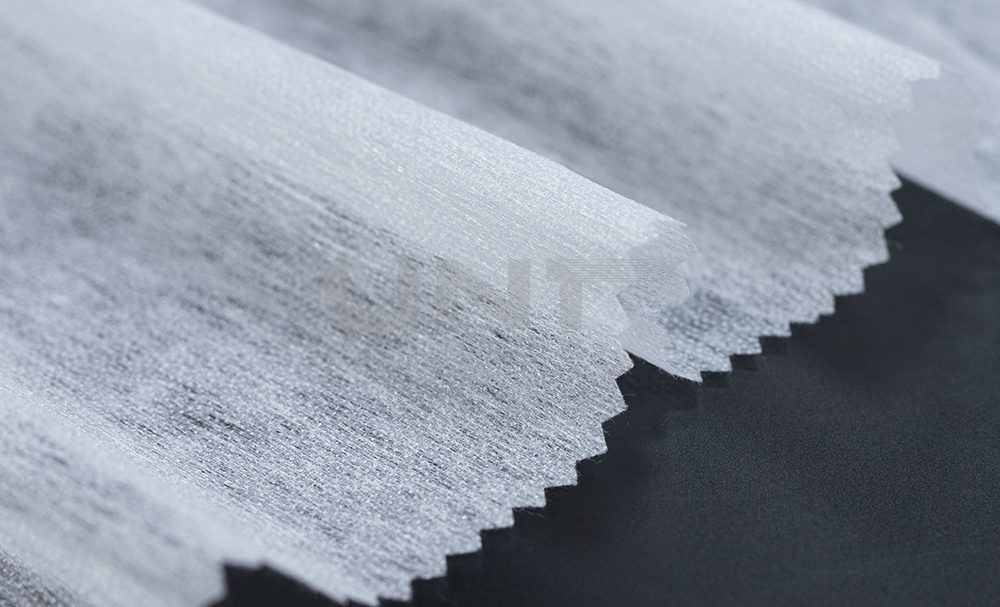
Spunlace nonwoven interlining is produced using high-pressure water jets. It has a softer hand feel and better drape compared with other nonwoven types. It’s suitable for garments where comfort and softness are important.
Elastic Nonwoven Interlining
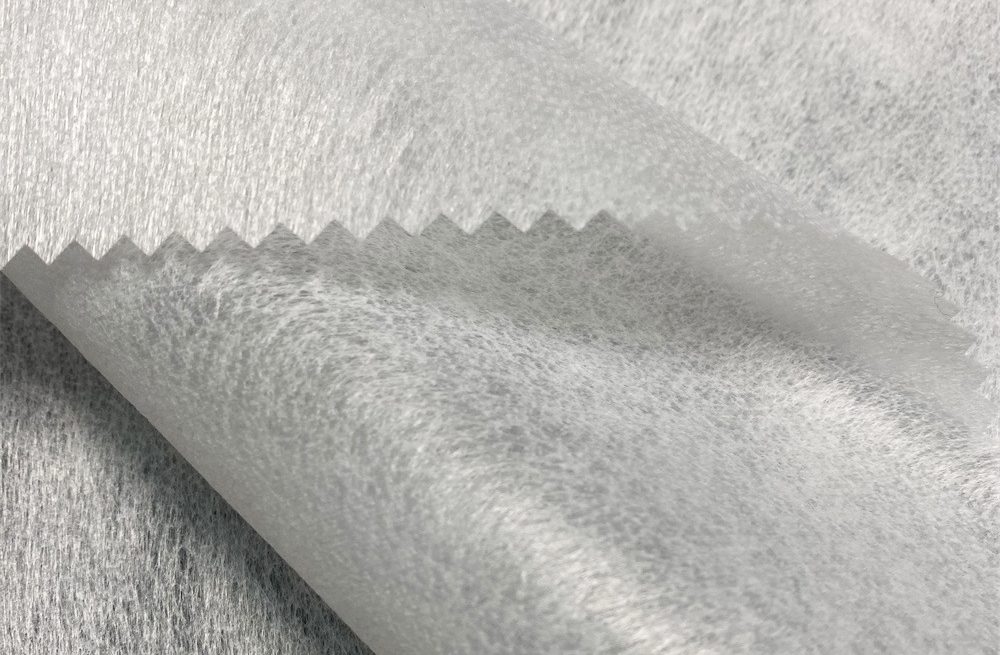
Elastic nonwoven interlining provides controlled stretch and recovery. It’s mainly used in garments that need flexibility, such as waist areas or parts that move frequently.
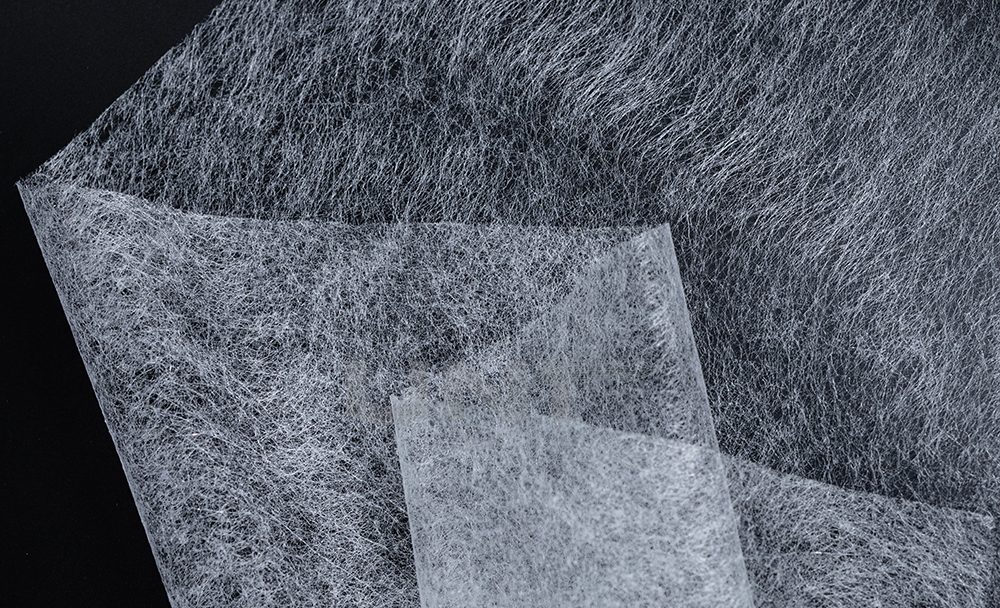
Is Hot Melt Adhesive Web a Type of Nonwoven Interlining?
Strictly speaking, hot melt adhesive web can also be considered a type of nonwoven interlining. Instead of providing fabric support by itself, it works mainly as a bonding layer. It’s widely used to laminate fabrics or bond interlining to outer materials, especially when uniform adhesion is required.
Where Is Nonwoven Fusible Interlining Used?
Shirts
Used in collars, cuffs, plackets, and front panels.
Casual Wear
Helps garments keep shape without feeling stiff.
Light Jackets
Adds support to specific areas without extra weight.
Fashion Garments
Works well when a clean shape is needed but flexibility is still important.
Nonwoven vs Woven Fusible Interlining
Nonwoven Interlining
-
Easier to handle
-
Lower cost
-
Even behavior in all directions
Woven Interlining
-
Stronger structure
-
Clear fabric direction
-
Often used for formal garments
Each type has its own place, depending on garment design and fabric choice.
How to Choose the Right Nonwoven Fusible Interlining
Match the Fabric Weight
Light fabrics need light interlining; heavy fabrics need stronger support.
Check Adhesive Quality
Good adhesive ensures stable bonding and wash durability.
Consider Shrinkage
Interlining and outer fabric should behave similarly after washing.
Test Before Bulk Production
Testing helps avoid bubbling, peeling, or hard hand feel.
Common Problems and How to Avoid Them
-
Bubbling: wrong fusing temperature or pressure
-
Hard Feel: interlining too thick for the fabric
-
Poor Bonding: low-quality adhesive or short bonding time
Most issues can be solved with proper testing and selection.
FAQ
Q1: Is nonwoven fusible interlining washable?
Yes, when properly fused, it performs well in regular washing.
Q2: Can it be used on stretch fabrics?
It can, but knitted interlining may be a better choice for high stretch fabrics.
Q3: Does nonwoven interlining shrink?
High-quality products have controlled shrinkage.
Q4: Is it suitable for mass production?
Yes, it’s widely used in large-scale garment manufacturing.
Why Choose Shanghai Uneed Textile Co., Ltd.?
-
Specialized in Interlining Products
Strong experience with woven, knitted, and nonwoven interlining. -
Consistent Quality Control
Tested for bonding strength, shrinkage, and stability. -
Wide Product Range
Different weights, materials, and adhesive options available. -
Reliable Export Service
Clear communication and stable supply for overseas customers. -
Practical Technical Support
Recommendations based on real garment production needs.
continue reading
Related Posts

Shirt collar interlining helps a collar keep its shape, stiffness, and smooth appearance. This article explains the types, materials, and how to choose the right shirt collar interlining.
-
This article explains cotton interlining, its structure, properties, and why it is mainly used in shirt and collar interlining applications.
-
This article explains how to use fusible interlining correctly, including preparation, fusing steps, common mistakes, and practical tips.
.png)