
What Is Knitted Interlining Used For?
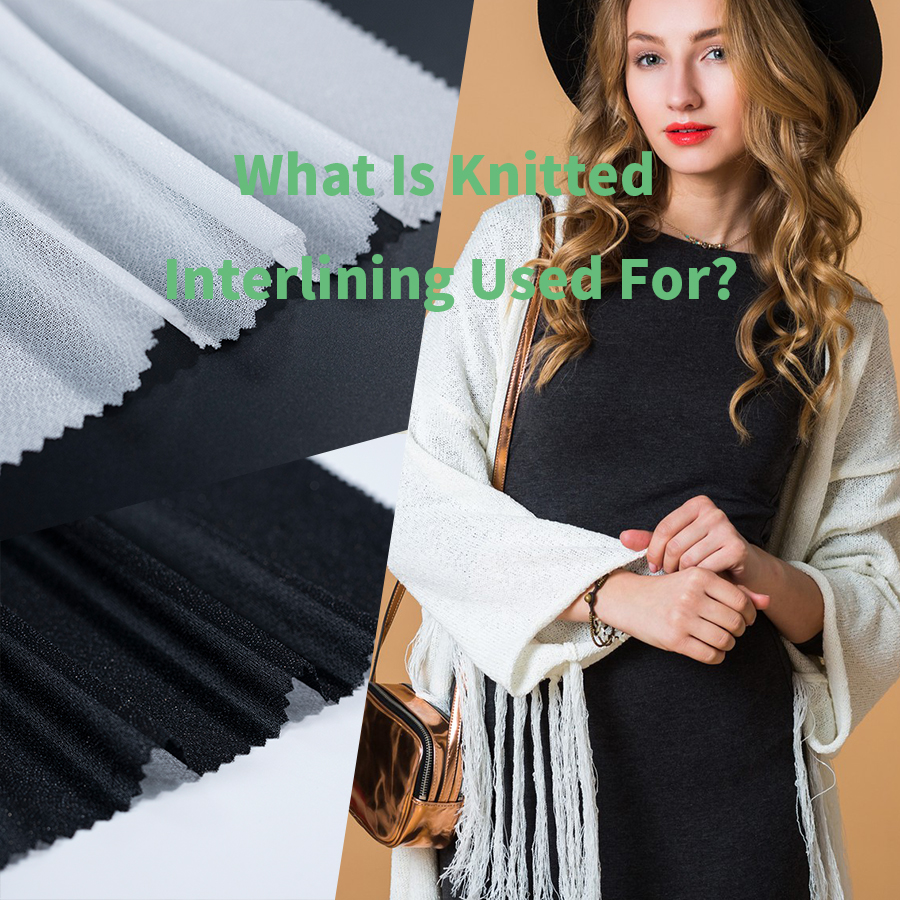
Knitted interlining has become more and more common in today’s garment industry. As clothing styles move toward comfort, flexibility, and lightweight designs, traditional stiff interlining is no longer suitable for every product. It offers support while allowing garments to move naturally with the body. In this article, we’ll take a closer look at how knitted-interlining works, where it’s used, and why many factories prefer it.
What Is Knitted Interlining?
It is made using a knitting structure instead of a weaving structure.
This gives the fabric a softer feel and a certain level of stretch, which helps it work well with flexible outer fabrics.
Most knit interlining is made from polyester yarn and supplied as fusible interlining, with adhesive applied evenly on one side. When fused correctly, it bonds well without changing the natural drape of the garment.
How Does the Knitted Structure Affect Performance?
Natural Stretch
The knitted structure allows the interlining to stretch slightly and return to shape. This reduces pulling and tension in the garment.
Better Fabric Movement
When the outer fabric bends or stretches, the interlining moves with it instead of resisting it.
Improved Wearing Comfort
Garments feel less tight and more relaxed, especially during daily movement.
Knitted Interlining vs Woven Interlining
Hand Feel
It feels softer and lighter, while woven interlining usually feels firmer.
Appearance
Garments with look more natural and less rigid.
Stretch Compatibility
It matches stretch fabrics better, reducing distortion.
Garment Style
It suits casual and fashion garments, while woven interlining is better for structured styles.
Main Types of Knitted Interlining
Warp Knitted Interlining
-
More stable structure
-
Controlled stretch
-
Smooth surface
-
Widely used in mass production
This type is often chosen for garments that need both comfort and shape control.
Weft Knitted Interlining
-
Higher elasticity
-
Softer touch
-
More flexible
It’s suitable for garments where movement and comfort are the main priorities.
Common Uses of Knitted Interlining
It is used in many parts of garments, not just one area.
Casual Wear
T-shirts, casual tops, and relaxed styles benefit from the soft support it provides.
Women’s Fashion
Used in blouses, dresses, and lightweight jackets to maintain shape without stiffness.
Knit Garments
Perfect for matching knit fabrics, preventing uneven stretching.
Front Panels and Facings
Adds structure while keeping a smooth appearance.
Collars and Plackets
Provides shape but avoids a hard or thick feel.
Why Do Manufacturers Prefer Knitted Interlining?
Less Risk During Production
It reduces problems like bubbling, fabric pulling, or uneven bonding.
Better After Washing
Garments keep their original look better after repeated washing.
Higher Comfort for End Users
Consumers prefer clothing that feels soft and flexible.
Suitable for Trend-Driven Fashion
Modern styles often require softer silhouettes.
How to Choose the Right Knitted Interlining
Match the Fabric Type
Stretch fabric should be paired with stretch-friendly interlining.
Choose the Right Weight
Light garments need light interlining to avoid a heavy feel.
Check Adhesive Quality
Good adhesive ensures clean bonding without marks.
Test Before Production
Always test with real fabric and washing conditions.
Fusing Tips for Knitted Interlining
-
Use moderate temperature to avoid fabric damage
-
Apply even pressure for consistent bonding
-
Allow cooling time before handling
-
Avoid stretching fabric during fusing
These steps help achieve a smooth and durable result.
FAQ
Q1: It’s suitable for all garments?
It’s best for casual, fashion, and stretch garments, not very stiff designs.
Q2: Can knit interlining be used on woven fabrics?
Yes, especially when a softer hand feel is needed.
Q3: Does it affect garment breathability?
Good-quality knitted interlining maintains breathability.
Q4: Will it lose shape after washing?
When properly fused, it remains stable through normal washing.
Why Choose Shanghai Uneed Textile Co., Ltd.?
-
Experienced in Interlining Products
Deep understanding of knitted, woven, and nonwoven interlining. -
Strict Quality Control
Inspection of bonding strength, stretch recovery, and shrinkage. -
Wide Selection
Different weights, stretch levels, and widths available. -
Export-Focused Service
Reliable delivery, clear communication, and stable supply. -
Technical Guidance
Practical advice for matching interlining with fabric and garment style.
continue reading
Related Posts

Shirt collar interlining helps a collar keep its shape, stiffness, and smooth appearance. This article explains the types, materials, and how to choose the right shirt collar interlining.
-
This article explains cotton interlining, its structure, properties, and why it is mainly used in shirt and collar interlining applications.
-
This article explains how to use fusible interlining correctly, including preparation, fusing steps, common mistakes, and practical tips.
.png)