
Which Waistband Interlining Should You Use?
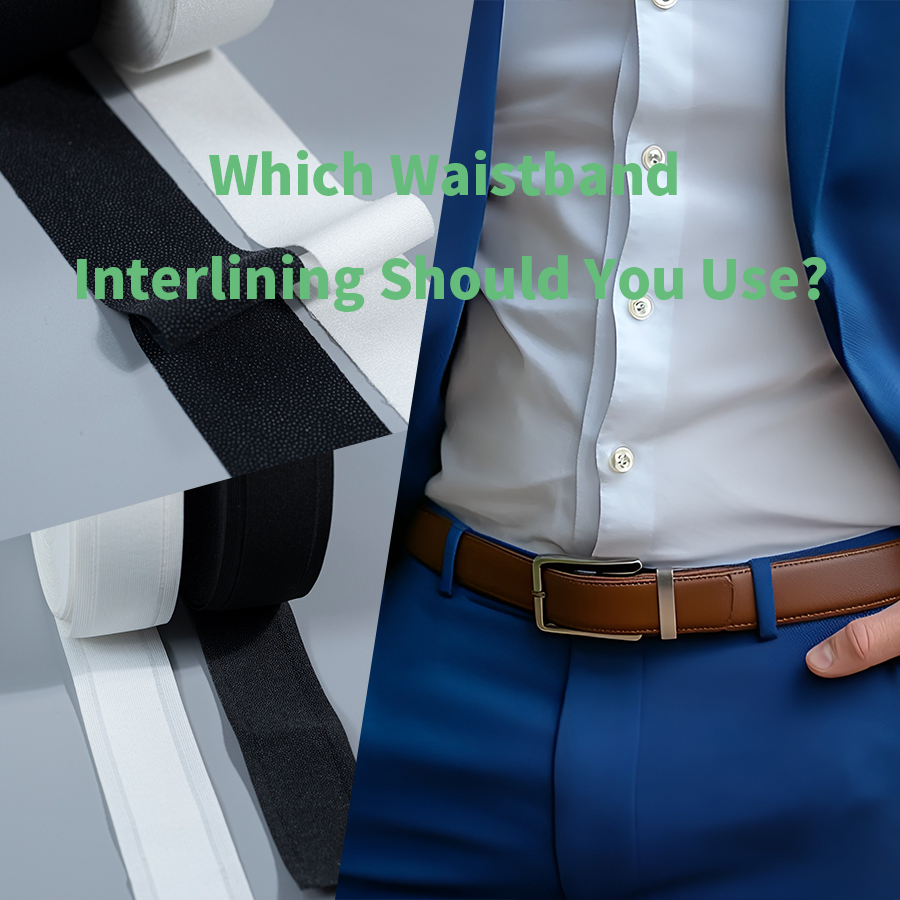
In real garment production, the waistband is not just a design detail. It affects how trousers fit, how they feel when worn, and how well they hold up after washing. Waistband interlining is used to control stretch, keep the waistband flat, and avoid shape problems later. This article explains waist band interlining in a practical way, focusing on how it is actually used in factories and what buyers should pay attention to.
What Is Waistband Interlining in Real Use?
Waist band interlining is a support material used only in the waistband area of trousers, skirts, and similar garments.
Unlike general interlining, it is chosen specifically to handle:
-
horizontal tension
-
repeated pulling during wear
-
washing and drying stress
In most cases, waist band interlining is fusible and supplied in strip form or cut from rolls according to waistband width.
Why the Waistband Area Needs Special Interlining
High Stress Area
The waistband is constantly pulled when sitting, standing, or bending. Ordinary interlining may stretch out over time.
Shape Control
Without proper interlining, waistbands can wrinkle, curl, or lose their straight shape.
Fit and Comfort
A good waistband should feel firm but not tight. The wrong interlining can make it stiff or uncomfortable.
Common Types of Waistband Interlining Used by Factories
In actual orders, waist band interlining is usually chosen based on fabric type and garment style.
Woven Waistband Interlining
How It’s Used
-
Formal trousers
-
Uniforms
-
Dress pants
Why Factories Choose It
-
Very stable
-
Controls stretch well
-
Keeps waistband straight
This type is often used when appearance and structure are more important than softness.
Knitted Waistband Interlining
How It’s Used
-
Casual trousers
-
Women’s pants
-
Stretch fabric garments
Why Factories Choose It
-
Slight elasticity
-
More comfortable
-
Moves better with fabric
It’s a good option when the outer fabric has stretch and comfort is a priority.
Nonwoven Waistband Interlining
How It’s Used
-
Mass production styles
-
Everyday garments
Why Factories Choose It
-
Lightweight
-
Cost-effective
-
Easy to fuse
Usually selected for simple designs where medium support is enough.
Important Specifications Buyers Care About
In real inquiries, buyers usually focus on these points:
Width
Waist band interlining often comes in fixed widths, such as 3cm, 4cm, 5cm, or custom sizes.
Weight
Heavier weight gives more support, lighter weight improves comfort.
Stretch Direction
Some waist band interlining is designed with controlled stretch in one direction only.
Adhesive Performance
Good adhesive prevents bubbling and peeling after washing.
Common Problems Caused by Wrong Waistband Interlining
From real factory feedback, these are common issues:
-
Waistband rolling after washing
-
Bubbling during fusing
-
Waistband becoming too hard
-
Stretching out after wearing
Most of these problems are caused by mismatched interlining rather than sewing mistakes.
Practical Tips for Choosing Waistband Interlining
Match Fabric Weight
Heavy fabrics need firm support. Light fabrics need softer interlining.
Test Stretch
Always stretch the waistband sample before confirming.
Wash Test
Washing tests help avoid customer complaints later.
Don’t Use General Interlining
Waistband areas need purpose-made support, not random interlining.
FAQ
Q1: Can one waist band interlining be used for all trousers?
No. Different fabrics and styles require different support levels.
Q2: Is fusible waist band interlining better than non-fusible?
For modern production, fusible is faster and more consistent.
Q3: Does waist band interlining affect comfort?
Yes. Too stiff or too thick interlining reduces wearing comfort.
Q4: Should waist band interlining stretch?
Some styles need controlled stretch, others need full stability.
Why Choose Shanghai Uneed Textile Co., Ltd.?
-
Focused on Interlining Products
Strong experience with waistband, collar, and garment interlining. -
Real Production Understanding
Recommendations based on factory use, not theory. -
Stable Quality Control
Testing for shrinkage, bonding strength, and wash performance. -
Flexible Supply Options
Roll form or strip form, multiple widths and weights. -
Reliable Export Service
Clear communication, stable quality, and on-time delivery.
continue reading
Related Posts

Shirt collar interlining helps a collar keep its shape, stiffness, and smooth appearance. This article explains the types, materials, and how to choose the right shirt collar interlining.
-
This article explains cotton interlining, its structure, properties, and why it is mainly used in shirt and collar interlining applications.
-
This article explains how to use fusible interlining correctly, including preparation, fusing steps, common mistakes, and practical tips.
.png)