
How Do You Choose Microdot Fusible Interlinings?
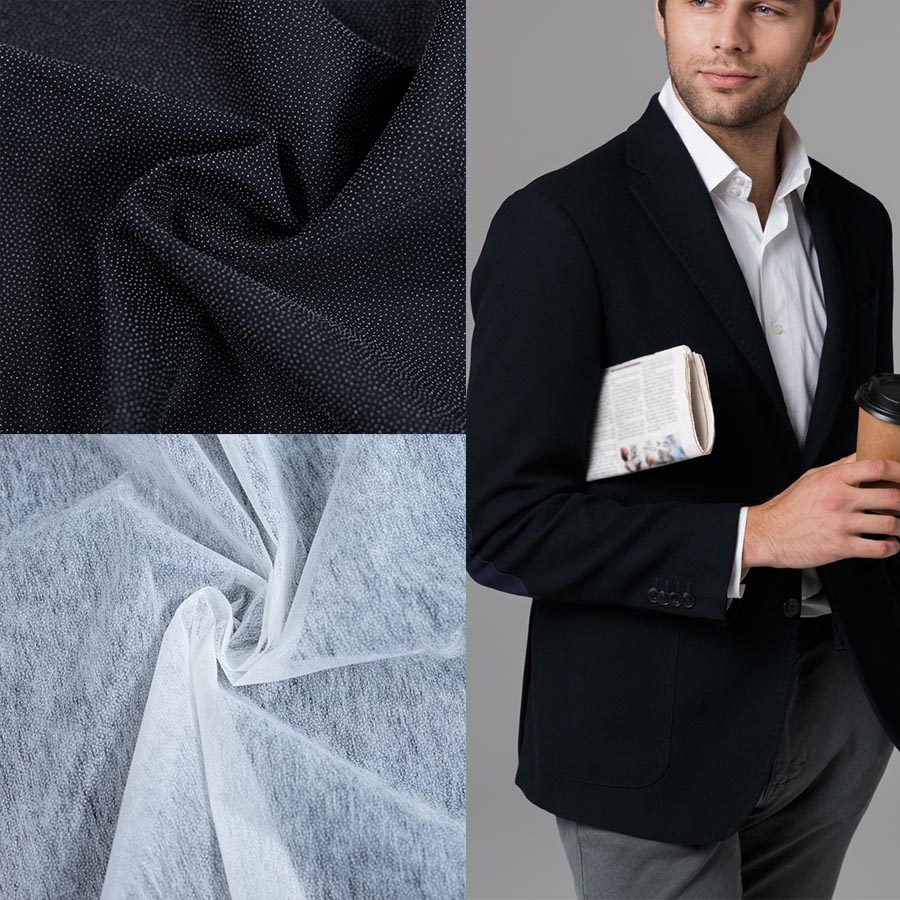
When buyers first hear the term microdot fusible interlinings, it can sound like a completely different type of interlining.
Actually, “microdot” mainly describes the adhesive coating.
Very small hot melt adhesive dots are evenly applied to one side of the interlining base fabric. During fusing, these dots melt under heat and pressure and bond the interlining to the garment fabric.
The base itself can be woven, nonwoven, or another suitable construction.
The advantage of the microdot coating is that it can provide bonding without covering the whole surface with adhesive.
This is especially useful when the garment needs support but should still feel soft and natural.
What Is Microdot Fusible Interlining?
Microdot fusible interlining is a fusible interlining coated with fine adhesive dots.
Compared with a coarser adhesive coating, the smaller dots can distribute adhesive more evenly across the surface.
This can help with:
- Smooth bonding
- Softer hand feel
- Lower risk of adhesive strike-through
- Better surface appearance
- More controlled adhesive distribution
Microdot coating is especially useful for lightweight and medium-weight garment fabrics where a heavy adhesive layer may change the appearance or feel of the outer fabric.
However, microdot does not automatically mean better performance.
The correct result still depends on the adhesive type, dot density, coating weight, base fabric, and fusing conditions.
Which Base Fabrics Can Use Microdot Coating?
Microdot coating is not limited to one interlining construction.
| Base Type | Main Character | Typical Use |
|---|---|---|
| Nonwoven | Lightweight and economical | Shirts, dresses, general garments |
| Woven | Stable and fabric-like | Collars, cuffs, jackets |
| Knit | Flexible and soft | Stretch or lightweight garments |
A microdot nonwoven and a microdot woven interlining may use similar coating technology, but they will behave differently because their base fabrics are different.
The garment application should therefore be considered before choosing the coating.
Why Are Small Adhesive Dots Useful?
The adhesive is only needed to create a stable bond between the interlining and shell fabric.
Covering too much surface with glue can affect the garment.
For thin fabrics, excessive adhesive may:
- make the fused area stiff;
- become visible through the fabric;
- create surface marks;
- reduce the original drape.
Fine adhesive dots allow the glue to be distributed across many small bonding points.
This can help maintain a cleaner surface and softer hand feel.
For this reason, microdot fusible interlinings are often considered for shirts, dresses, blouses, lightweight jackets, and other garments where appearance and softness matter.
Where Are Microdot Fusible Interlinings Used?
Common applications include:
- Shirt collars
- Cuffs
- Front plackets
- Dress facings
- Blouses
- Waistbands
- Lightweight jackets
- Casual garments
The exact product should match the outer fabric.
A microdot interlining for a lightweight blouse will normally require a different base weight and coating level from one used in a jacket.
What Should Buyers Check?
Dot Size and Distribution
The adhesive dots should be evenly distributed.
Uneven coating can create areas with different bonding strength.
Coating Amount
More glue is not always better.
Too much adhesive may increase stiffness or show through lightweight fabric.
Too little may reduce bonding strength.
Base Fabric
The base construction affects stability, stretch, softness, and drape.
Buyers should choose the base fabric first according to the garment requirement, then select a suitable coating.
Fusing Conditions
Temperature, pressure, and time all affect bonding.
If the temperature is too low, the adhesive may not activate correctly. Excessive heat or pressure may damage sensitive fabrics or change the surface appearance.
What Should Be Tested Before Production?
The best way to evaluate microdot interlining is to fuse it to the actual garment fabric.
Important tests include:
- Peel strength
- Bonding strength
- Fusing temperature, pressure, and time
- Shrinkage
- Dimensional stability
- Wash performance
- Tensile and breaking strength
- GSM and width
- Fluorescence
- Surface appearance after fusing
For thin fabrics, adhesive strike-through and surface marking should be checked carefully.
The sample should also be allowed to cool before final bonding performance is evaluated.
Common Problems
Adhesive Dots Show Through the Fabric
The coating may be too heavy or unsuitable for the shell fabric. Excessive fusing pressure or temperature may also contribute.
Bonding Is Too Weak
Possible causes include insufficient coating, unsuitable adhesive, low temperature, short fusing time, or poor compatibility with the fabric surface.
The Fabric Feels Too Hard After Fusing
The problem may come from the base fabric, coating amount, or adhesive system rather than the dot size alone.
Bubbling Appears After Washing
This can be related to weak bonding, incorrect fusing conditions, or different shrinkage between the interlining and shell fabric.
FAQ
Are microdot fusible interlinings always nonwoven?
No. Microdot describes the adhesive coating. The base can be nonwoven, woven, knit, or another suitable construction.
Is microdot better than normal dot coating?
It can be useful for applications requiring fine adhesive distribution and a softer surface, but the correct coating depends on the garment fabric.
Are smaller glue dots always better?
No. Dot size, density, adhesive amount, and adhesive type need to work together.
Can microdot interlining be used for shirts?
Yes. It is commonly suitable for collars, cuffs, and plackets when the specification matches the shirt fabric.
Should microdot interlining be tested before bulk production?
Yes. Testing with the actual shell fabric is recommended because bonding and surface appearance can change with different fabrics.
Why Choose UNT?
UNT can produce woven, nonwoven, and knit fusible interlining with customized microdot coating, GSM, width, color, hand feel, adhesive amount, and packaging. OEM and ODM are available.
Testing can include peel strength, bonding strength, coating performance, shrinkage, dimensional stability, tensile and breaking strength, wash performance, fluorescence, and fusing temperature/pressure/time.
- Samples: within 3 days
- Stock orders: 3–7 days
- Customized orders: 7–15 days
- OEKO: SH001 285226
- GRS: BVC-TE-00011147-GRS-2602-50007497-V1.0
Contact Us
Shanghai Uneed Textile Co., Ltd
TEL: +86-21-33608891
FAX: +86-21-33608892
Email: info@uneed-tex.com
continue reading
Related Posts
-
Microdot fusible interlinings use fine adhesive dots for smooth bonding, soft hand feel, and clean garment appearance.

Dress interfacing supports necklines, waistbands and bodices. Learn how to choose the right type for different dress fabrics.
-
Suit interlining helps control jacket shape, lapels and fronts. Learn how to choose fusible interlining or hair canvas for suits.
.png)