Which Handbag Interfacing Works for Your Design?
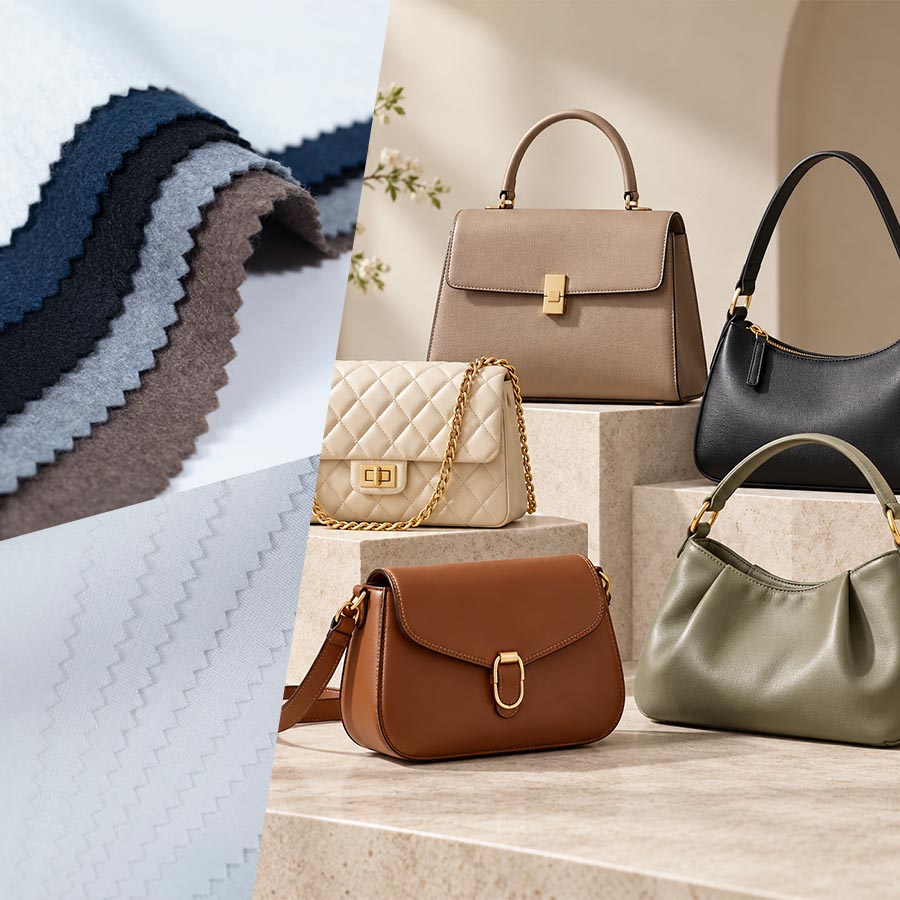
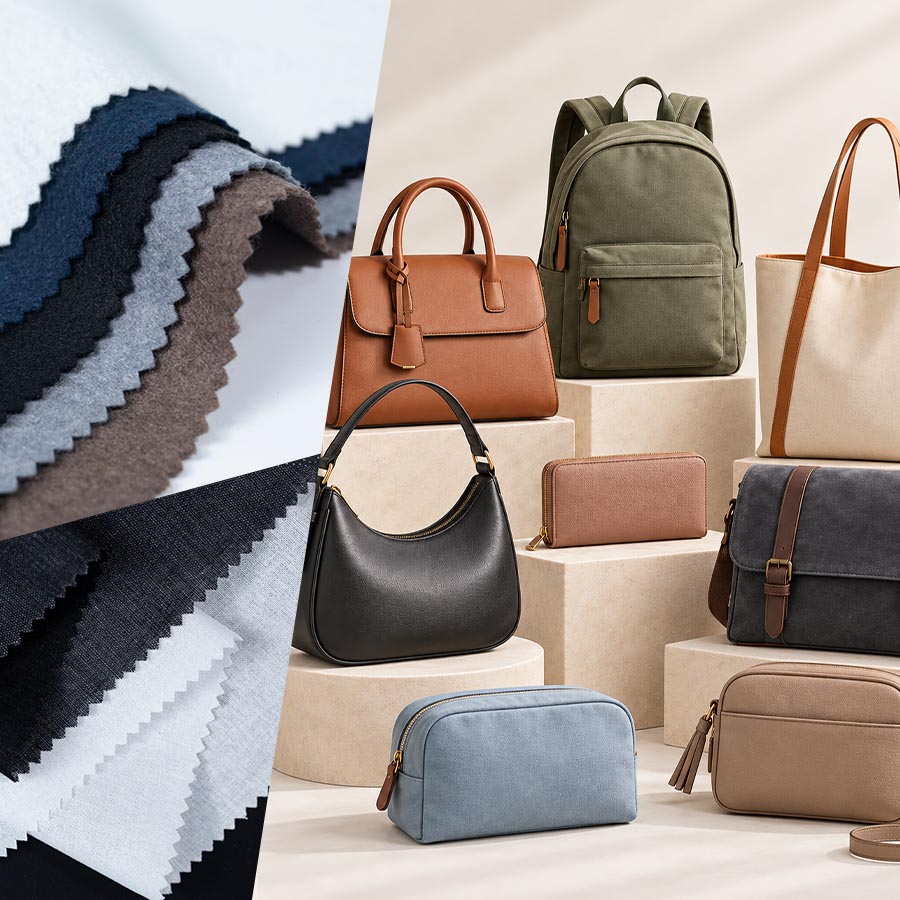
A soft leather handbag and a structured handbag need different support materials.
A soft bag should bend naturally when carried. A structured bag needs firm panels, straight edges, and a bottom that holds its shape even when the bag is empty.
Using the wrong handbag interfacing creates problems. The bag can become too hard to sew, develop creases, or lose its shape after use.
Before choosing a material, look at the handbag design and decide how firm each part needs to be.
What Does Handbag Interfacing Do?
Handbag interfacing is placed inside the bag to support the outer material.
It helps strengthen panels, control stretching, and keep the finished bag in the intended shape.
Handbag manufacturers use it in several areas:
- Front and back panels
- Side panels and gussets
- Bag flaps
- Handles and strap attachment points
- Zipper openings
- Linings and internal pockets
- Selected bottom sections
These parts do not need the same stiffness.
For example, the front panel of a structured handbag needs firm support, while the lining usually needs only light reinforcement.
Which Materials Are Used for Handbags?
Nonwoven Interfacing
Nonwoven interfacing is used for many handbag applications.
It comes in different weights, thicknesses, and stiffness levels.
Chemical bond and thermal bond nonwoven materials are two options. Their hand feel and strength vary with the fiber composition, bonding method, and finishing process.
For structured handbags, dense nonwoven interfacing is worth testing when the panels need to hold their shape.
Woven Interfacing
Woven interfacing works well with cotton canvas and other woven handbag fabrics.
It helps stabilize the outer material while keeping some flexibility.
Fusible woven interfacing is useful for fabric handbag panels, flaps, and linings.
Before ordering, check the bonding and finished hand feel with the actual outer fabric.
Needle-Punched Felt
Needle-punched felt provides thickness and a fuller feel.
It is used in handbag panels and other areas that need cushioning or additional body.
Different densities produce different results. Softer felt adds padding, while denser grades give more support.
For handbags that need sharp edges and a rigid shape, felt alone is not always enough.
Hot Melt Adhesive Web
Hot melt adhesive web joins two material layers together.
For example, it can bond an outer fabric to a nonwoven support layer.
It acts as an adhesive rather than a structural interfacing. The support comes mainly from the material being bonded.
Which Interfacing Fits Each Handbag Part?
Handbag factories often use more than one support material in a single design.
| Handbag Part | Material to Consider | Main Requirement |
|---|---|---|
| Soft body panels | Lightweight woven or nonwoven | Flexibility |
| Structured body panels | Firm, dense nonwoven | Shape retention |
| Flaps | Woven or firm nonwoven | Controlled bending |
| Side gussets | Flexible woven or nonwoven | Support during folding |
| Handles and strap attachments | Firm woven or nonwoven reinforcement | Strength |
| Linings and pockets | Lightweight nonwoven | Fabric stability |
| Rigid bottom | Stiffener board or composite support | Firm bottom structure |
For a rigid handbag bottom, ordinary textile interfacing is often too soft. A separate stiffener sheet or board is the better option.
How Should You Choose Handbag Interfacing?
Start with the Outer Material
Cotton canvas, polyester fabric, PU synthetic leather, and genuine leather react differently during production.
Fusible interfacing works well with suitable fabrics, but coated materials and leather need special attention.
Excessive heat or pressure can damage the surface.
Test a small bonded panel before approving the material. If the outer material cannot tolerate fusing, use a sew-in support.
Check Stiffness and Thickness
Don’t select handbag interfacing by GSM alone.
Two nonwoven materials with the same weight can have different thicknesses and stiffness.
For a soft handbag, the material should bend without leaving strong creases.
For a structured handbag, the panels should remain firm without becoming unnecessarily thick.
Thickness also matters during sewing. Several layers of stiff material around a corner can make the seam bulky.
Consider the Finished Shape
A handbag with a curved body needs support that follows the curve.
A box-shaped handbag needs firmer panels and defined edges.
Check the complete panel rather than judging only a small piece of interfacing.
What Should Be Tested Before Production?
For handbag interfacing, the most useful tests are those related to strength, stiffness, and shape.
- GSM and thickness: Check material consistency.
- Tensile and breaking strength: Measure resistance to pulling forces.
- Tear strength: Check resistance to tearing around stressed areas.
- Bending stiffness: Measure how much force is needed to bend the material.
- Shape recovery: Check for permanent creases after repeated bending.
- Peel strength: Test adhesive bonding for fusible materials.
- Dimensional stability: Check size changes after heat treatment.
For structured handbags, make a finished panel sample.
This shows whether the interfacing gives enough support without creating problems at the seams or corners.
Common Problems with Handbag Interfacing
The Handbag Collapses When Empty
Check the stiffness of the body panels. A denser nonwoven or an additional supporting layer can help the bag keep its shape.
The Corners Are Too Bulky
Too much interfacing has been carried into the seam area. Adjust the pattern or reduce the support layers near the seams.
The Bag Develops Creases
Some stiff materials do not recover well after repeated bending. Compare bending recovery before selecting the final specification.
The Outer Material Wrinkles After Fusing
Check the adhesive coating, temperature, pressure, and heat response of both materials.
FAQ
Is handbag interfacing different from garment interfacing?
Some products are the same, but handbags often need more thickness or stiffness than garments. The finished bag design determines the required support.
Which interfacing is suitable for structured handbags?
Dense nonwoven and firm woven interfacing are common options. Very rigid handbags often need an additional stiffener.
Can nonwoven interfacing be used with leather?
Yes, but adhesive compatibility and pressing conditions must be tested. Sew-in support is another option.
Is heavier handbag interfacing always firmer?
No. Fabric density, bonding method, thickness, and finishing also affect stiffness.
Can handbag interfacing be customized?
Yes. GSM, thickness, width, color, stiffness, coating, roll length, and packaging can be customized.
Why Choose UNT?
Shanghai Uneed Textile Co., Ltd. supplies woven and nonwoven materials for handbag reinforcement.
Our production supports nonwoven bonding, fabric finishing, adhesive coating, slitting, and roll inspection. OEM and ODM specifications are available for different weights, thicknesses, widths, colors, and stiffness levels.
Testing is available for tensile strength, tear strength, bending stiffness, shape recovery, peel strength, and dimensional stability.
- Samples: normally within 3 days
- Stock orders: 3–7 days
- Customized orders: 7–15 days
Available certification includes OEKO (SH001 285226) and GRS (BVC-TE-00011147-GRS-2602-50007497-V1.0), subject to product applicability.
Contact Us
Shanghai Uneed Textile Co., Ltd
TEL: +86-21-33608891
FAX: +86-21-33608892
Email: info@uneed-tex.com
continue reading
Related Posts

Trench coat interlining for wool, cashmere, and lightweight coats. Compare napped, warp knit, and other interlining options.
-
Handbag interfacing helps soft and structured handbags hold their shape. Compare materials for panels, flaps, and handles.
-
Bag interfacing supports handbags, backpacks, totes, and travel bags. Learn how to match woven, nonwoven, and felt materials.