
How Do You Choose Polyester Woven Interlining?
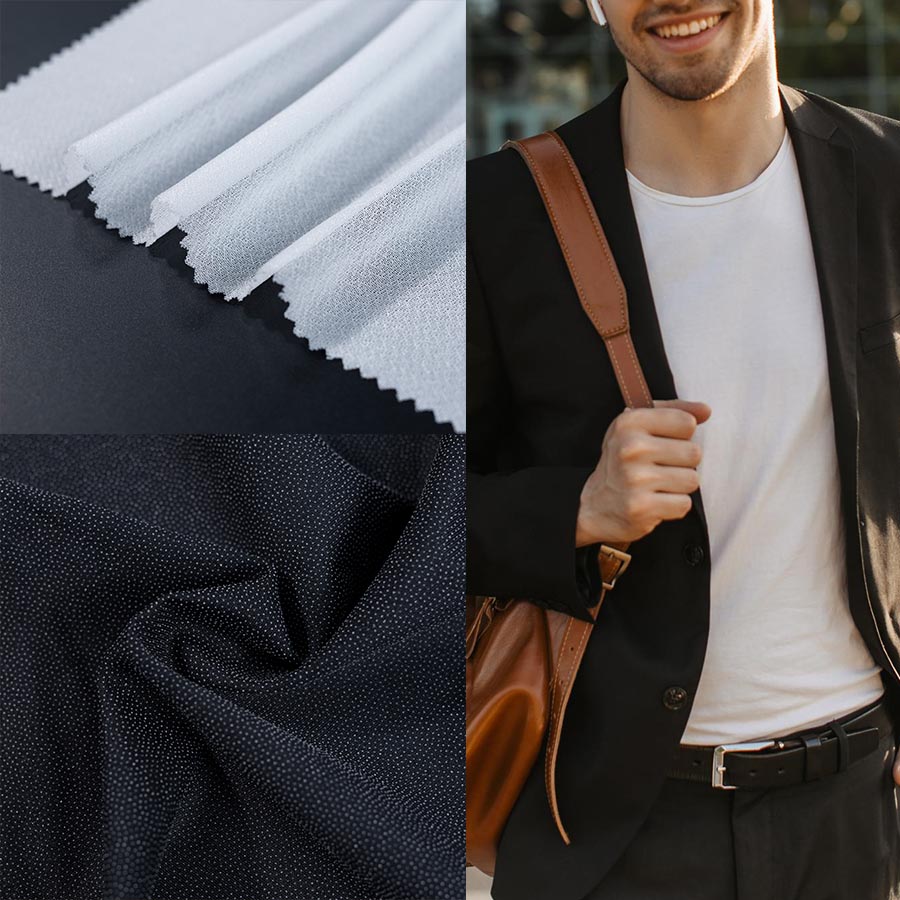
Polyester Woven Interlining
Two woven interlinings can have a similar weight and appearance but give very different results after fusing.
One may keep a shirt collar flat without making it hard. Another may feel too stiff. A third may bond well at first but show shrinkage or bubbling after washing.
This is why polyester woven interlining should be selected together with the outer fabric and garment application.
For garment factories and sourcing teams, fiber material is only the starting point. Fabric construction, weight, adhesive coating, shrinkage, hand feel, and fusing conditions all affect the finished garment.
What Is Polyester Woven Interlining?
Polyester woven interlining uses polyester yarns to form a woven base fabric.
For fusible applications, hot melt adhesive is applied to one side of the woven base. During garment production, heat and pressure activate the adhesive and bond the interlining to the shell fabric.
Polyester is commonly used because it provides a stable base and can be produced in different weights, constructions, and finishes.
It is commonly considered for:
- shirt collars;
- cuffs;
- front plackets;
- jackets;
- coats;
- uniforms;
- trousers;
- other structured garment parts.
The exact specification should be selected according to the garment rather than simply choosing a heavier product for stronger support.
Why Use Polyester for Woven Interlining?
Polyester has several practical advantages in garment production.
Stable Fabric Structure
Polyester yarns can provide a stable woven structure.
This is useful when the garment part needs controlled support and the manufacturer wants the interlining to remain consistent during cutting, fusing, and sewing.
Different Hand Feel Options
Polyester woven interlining does not have to be very stiff.
By changing yarn construction, fabric weight, finishing, and adhesive coating, different hand feels can be developed for different garments.
A business shirt may need a cleaner and firmer collar, while a lightweight jacket may need softer support.
Suitable for Bulk Garment Production
Consistency matters when thousands of garments are being produced.
The woven base, coating amount, width, weight, and shrinkage need to remain within the required range from roll to roll.
This is one reason why buyers should evaluate production consistency as well as the first sample.
Where Is Polyester Woven Interlining Used?
The required performance changes according to the garment part.
| Application | Main Requirement | What Buyers Should Check |
|---|---|---|
| Shirt collar | Shape and clean appearance | Hand feel, peel strength, shrinkage |
| Cuff | Flatness and repeated wash performance | Bonding and dimensional stability |
| Front placket | Straight appearance | Weight, stiffness and bonding |
| Jacket front | Shape without excessive hardness | Drape and hand feel after fusing |
| Coat | Support for heavier outer fabric | Weight balance and shrinkage |
| Uniform | Stable appearance during repeated use | Wash performance and bonding |
This table is only a starting point.
The same polyester woven interlining may behave differently when it is fused to cotton, polyester, blended fabric, or a finished fabric with a special surface treatment.
How Does Fabric Weight Affect the Result?
GSM is one of the first specifications buyers ask about, but it should not be used alone.
A heavier product usually provides more body, but the final stiffness also depends on:
- yarn size;
- weave construction;
- finishing;
- adhesive coating;
- coating amount;
- outer fabric.
Two products with the same GSM can therefore feel different after fusing.
For lightweight shirt fabrics, too much support can make the collar or placket look unnatural.
For heavier jackets or coats, a very light interlining may not provide enough structure.
The better approach is to test several close specifications on the actual garment fabric.
What Should You Know About the Adhesive Coating?
For fusible polyester woven interlining, the adhesive is just as important as the base fabric.
The coating needs to create enough bonding without changing the surface of the outer fabric.
Buyers should consider:
- glue dot pattern;
- coating amount;
- fusing temperature;
- pressure;
- fusing time;
- washing requirement.
A higher coating amount does not automatically mean better quality.
On thin fabrics, too much adhesive may affect hand feel or become visible through the face fabric.
On difficult fabrics, too little adhesive may lead to low peel strength.
The coating therefore needs to match the application.
What Should Be Checked During Fusing?
A good interlining can still give a poor result if the fusing conditions are wrong.
Three factors are especially important:
Temperature
The temperature needs to be high enough to activate the adhesive but should not damage or discolor the outer fabric.
Pressure
The two materials need enough contact during fusing.
Uneven pressure can create areas with different bonding strength.
Time
If the fusing time is too short, the adhesive may not bond properly.
Too much heat exposure may also affect sensitive fabrics.
The recommended settings should always be checked with the actual outer fabric before bulk production.
What Tests Are Important for Polyester Woven Interlining?
Testing helps confirm whether the sample is suitable before production starts.
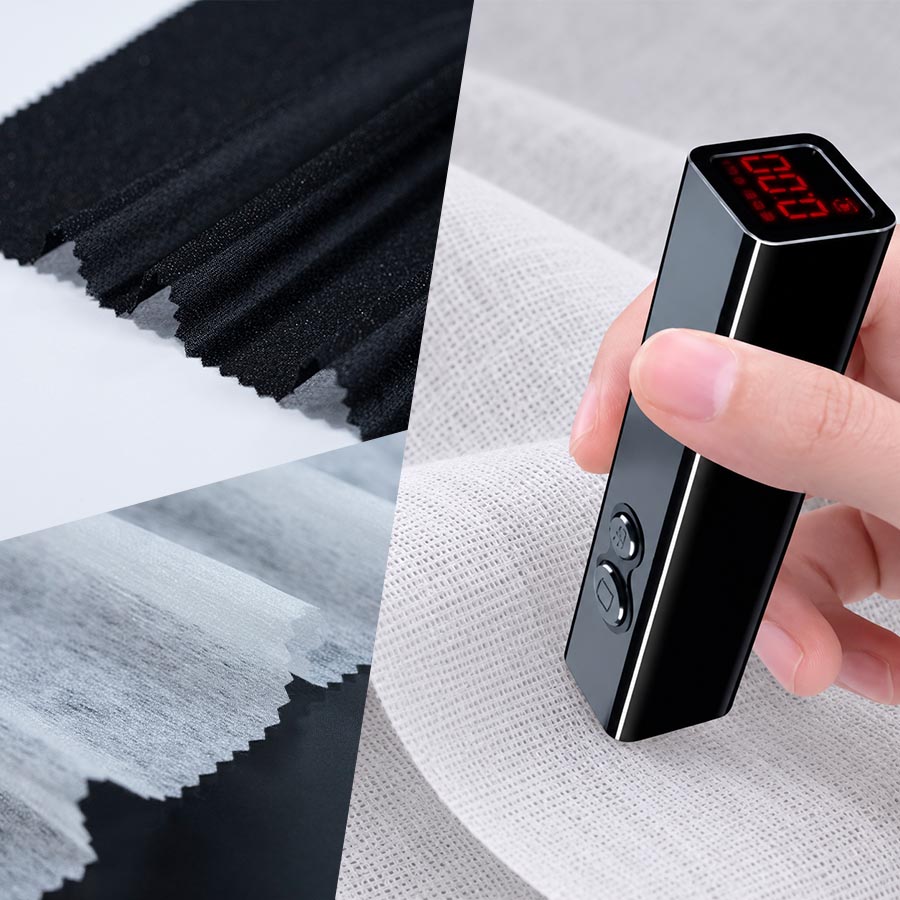
For polyester woven interlining, UNT can provide testing according to the customer’s garment requirements.
Common test items include:
Peel Strength
Peel strength checks how well the fusible interlining bonds to the outer fabric.
This is especially important after washing or care testing.
Tensile Strength
Tensile testing checks how the woven base performs when force is applied.
It helps evaluate whether the material has enough strength for cutting and garment construction.
Breaking Strength
Breaking strength is useful for checking the mechanical stability of the woven fabric.
Shrinkage
The interlining and outer fabric should not shrink at very different rates.
Large shrinkage differences can cause wrinkling, distortion, or bubbling.
Dimensional Stability
This checks whether the fabric keeps its size and shape after heat treatment or washing.
Fusing Performance
Different temperature, pressure, and time settings can be tested to find a suitable bonding condition.
Wash Performance
The bonded sample can be checked after washing for:
- bubbling;
- separation;
- edge lifting;
- surface change;
- hand-feel change.
Fluorescence
Fluorescence testing can also be provided when required by the customer or product standard.
Fabric Weight and Width
GSM and usable width can be checked to make sure the bulk material meets the agreed specification.
Testing requirements can be adjusted according to the customer’s market and finished garment.
Common Problems Buyers Should Watch For
The Fabric Becomes Too Hard
This may come from a base fabric that is too heavy, a firm finish, or an adhesive coating that is too strong for the shell fabric.
Changing only the GSM may not solve the problem.
Bonding Is Weak
Possible reasons include unsuitable coating, insufficient temperature, low pressure, short fusing time, or incompatibility with the outer fabric.
Bubbling Appears After Washing
Shrinkage differences, incorrect fusing, or weak bonding can all cause bubbling.
A wash test before bulk production helps identify this risk.
The Interlining Shrinks More Than the Garment Fabric
This can distort collars, cuffs, and front panels.
Shrinkage and dimensional stability should therefore be checked as a combination, not only on the interlining itself.
Questions About Polyester Woven Interlining
Is polyester woven interlining suitable for shirts?
Yes. It can be used for collars, cuffs, plackets, and other shirt parts, depending on the weight and required hand feel.
Is polyester woven interlining always fusible?
No. Woven interlining can be produced for different garment constructions, although fusible types are widely used in industrial garment production.
Is a heavier GSM always better?
No. A heavier product may provide more support, but it can also make the garment too stiff.
Can polyester woven interlining be washed?
Yes, suitable products can be used in washable garments, but the adhesive system and finished garment should be tested under the required care conditions.
Why is peel strength important?
It helps evaluate whether the interlining stays bonded to the outer fabric during use and washing.
Can the adhesive dot pattern be customized?
Yes. The coating and dot pattern can be selected or adjusted according to fabric and application requirements.
Should the outer fabric be sent for testing?
For important projects, yes. Testing the actual fabric and interlining together gives a more reliable result than testing the interlining alone.
Why Choose UNT for Polyester Woven Interlining?
For a woven interlining order, stable base fabric and controlled adhesive coating are both important.
UNT supports woven interlining production from base fabric preparation and finishing through adhesive coating, heat setting, rolling, cutting, and final inspection.
Different specifications can be developed according to the customer’s garment and fabric.
Production and Customization
We support customization of:
- polyester material and fabric construction;
- GSM;
- usable width;
- color;
- hand feel;
- adhesive dot pattern;
- coating amount;
- roll length;
- label and packaging.
OEM and ODM services are available.
Sample and Delivery Time
- Sample preparation: normally within 3 days
- Stock products: normally 3–7 days
- Customized production: normally 7–15 days
Final lead time depends on specification and order quantity.
Testing Support
For polyester woven interlining, testing can include:
- peel strength;
- bonding strength;
- tensile strength;
- breaking strength;
- shrinkage;
- dimensional stability;
- GSM;
- width;
- fusing temperature and pressure;
- wash performance;
- fluorescence.
Additional testing can be arranged according to customer standards and garment requirements.
Certificates
Available certification includes:
GRS
Certificate No.: BVC-TE-00011147-GRS-2602-50007497-V1.0
OEKO
Certificate No.: SH001 285226
Certificate applicability can be confirmed according to the specific product.
Payment Options
Available payment methods include:
- L/C
- D/A
- D/P
- T/T
- Western Union
Shipping and Trade Terms
Orders can be shipped by:
- sea freight;
- air freight;
- international express.
Trade terms include:
- FOB
- EXW
- DAP
- DDP
Competitive Pricing
UNT provides competitive pricing according to fabric construction, GSM, width, coating, quantity, and packaging requirements.
Providing the outer fabric, garment application, required hand feel, and expected order quantity helps us prepare a more accurate quotation and sample.
Contact Us
Shanghai Uneed Textile Co., Ltd
TEL: +86-21-33608891
FAX: +86-21-33608892
Email: info@uneed-tex.com
continue reading
Related Posts

Fluorescence testing for interlining checks fluorescent whitening agents and helps buyers meet garment quality requirements.
-
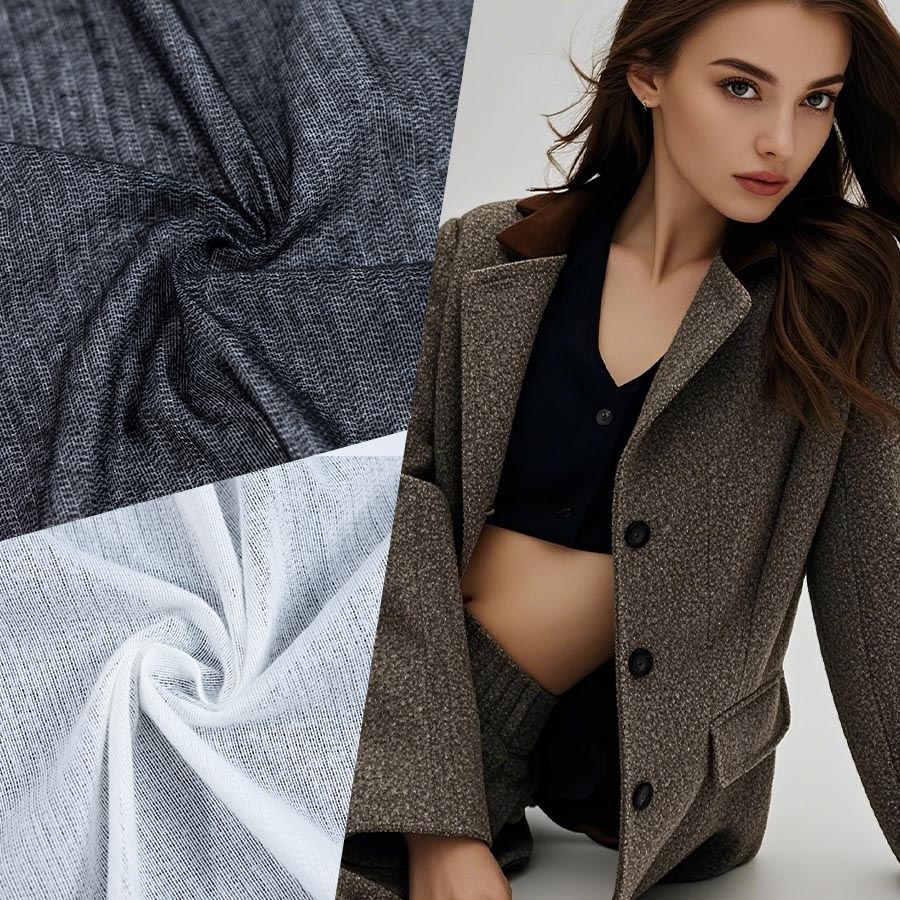
Interlining for wool coats should add shape without making the fabric stiff. Compare woven, napped, and hair interlining options.
-
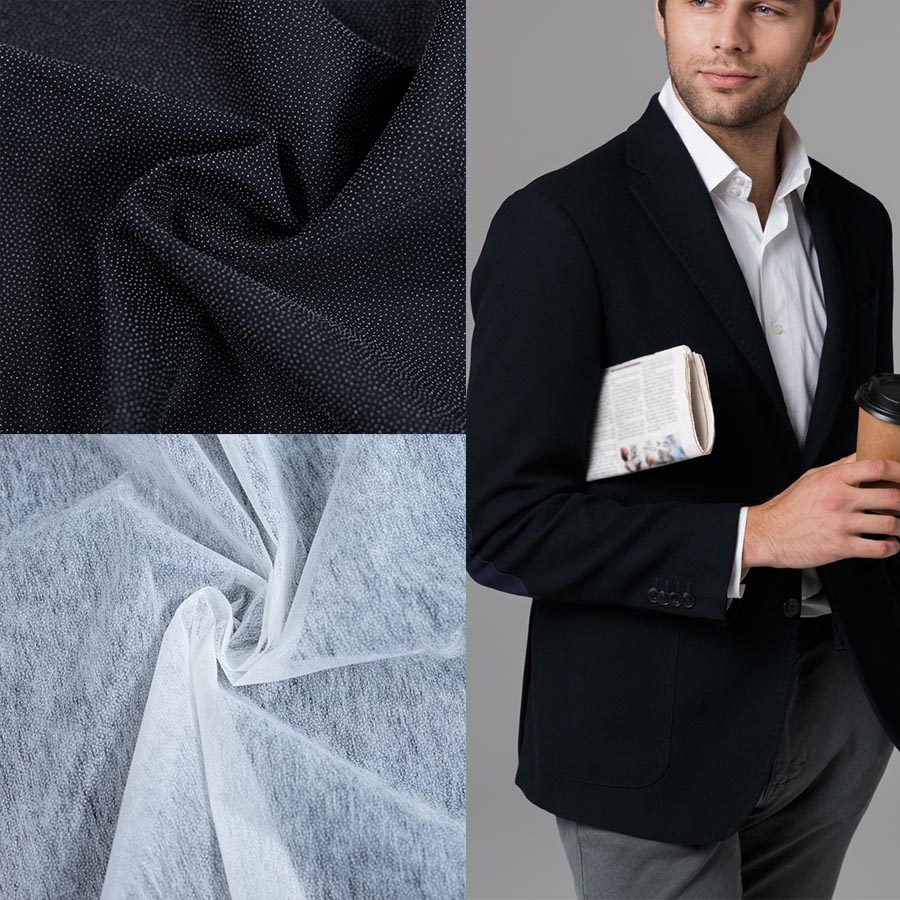
Microdot fusible interlinings use fine adhesive dots for smooth bonding, soft hand feel, and clean garment appearance.
.png)