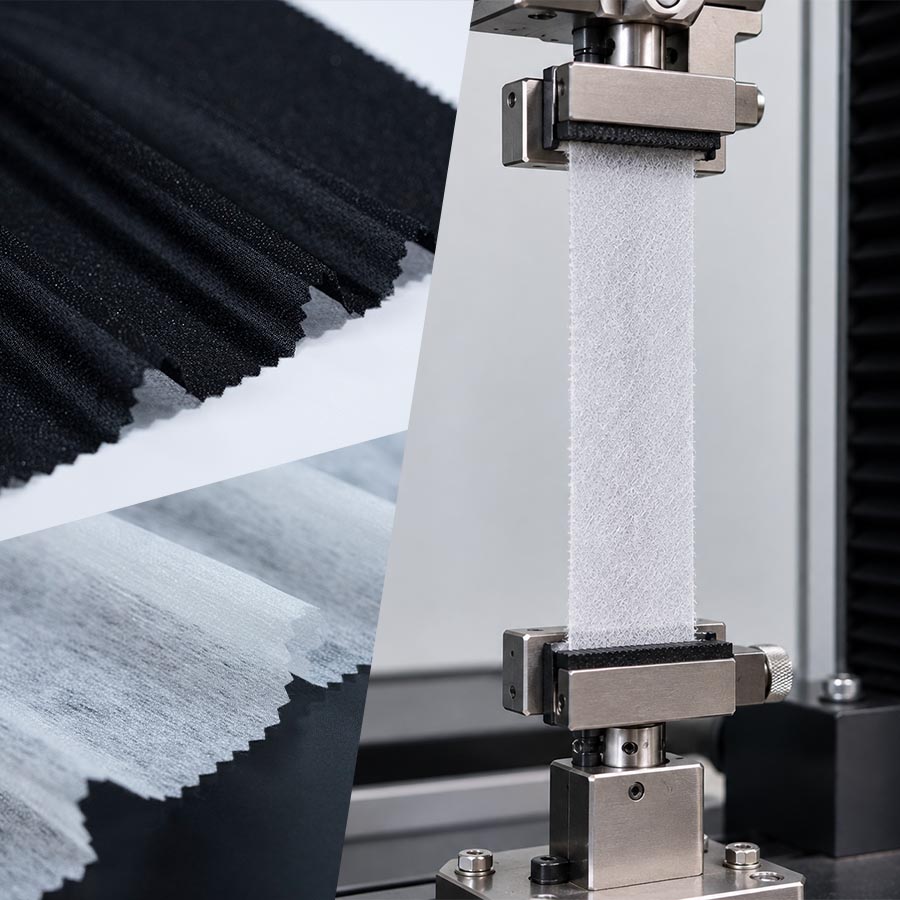
What Does Fluorescence Testing Mean for Interlining?
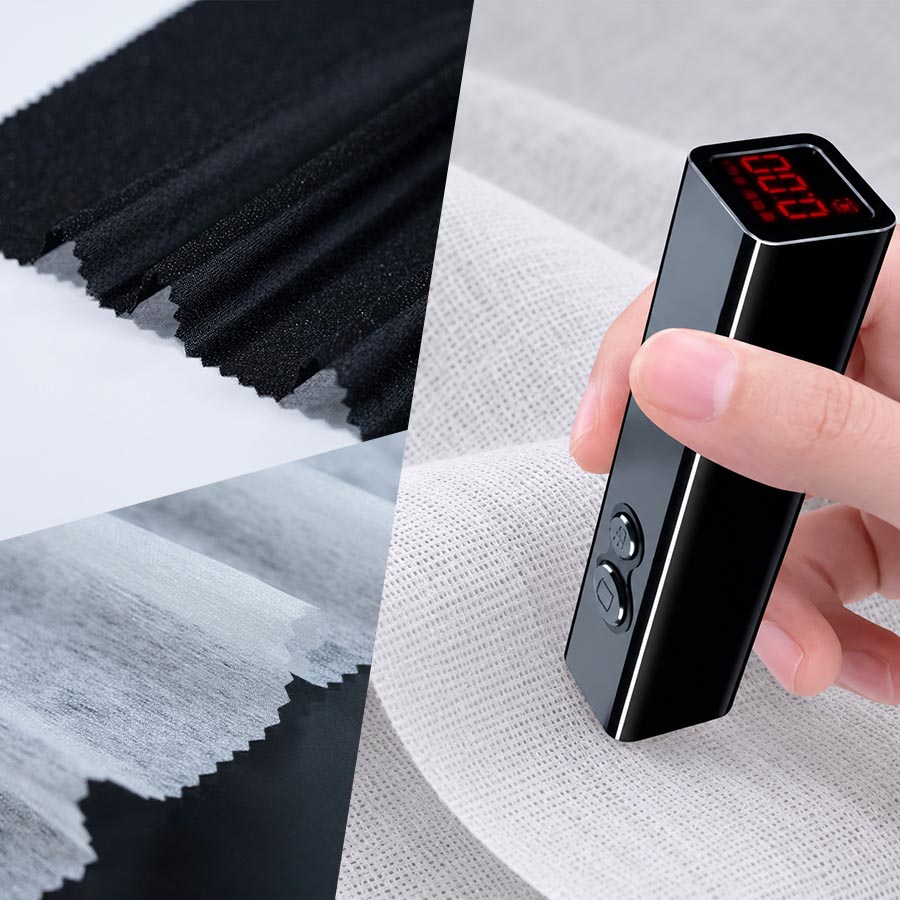
A buyer may send an interlining specification with one short requirement:
“No fluorescence.”
But this sentence can mean different things.
Some buyers simply want to know whether the material shows obvious fluorescence under ultraviolet light. Others are specifically concerned about fluorescent whitening agents used during fiber, fabric, or finishing production.
For interlining suppliers, the first step is therefore to understand what the customer wants to control and which test method is required.
What Is Fluorescence in Textile Materials?
Fluorescence occurs when a material absorbs ultraviolet energy and releases part of that energy as visible light.
In textile production, one common reason is the use of fluorescent whitening agents, also called optical brighteners.
These chemicals can make white or light-colored materials appear brighter by reducing a yellowish appearance.
They may be introduced through:
- Fibers
- Yarn processing
- Fabric finishing
- Chemical binders
- Washing or bleaching processes
- Other textile chemicals
This is why fluorescence is not only related to the final interlining coating.
The base fabric and earlier production processes may also affect the result.
Why Do Buyers Request Fluorescence Testing?
Not every garment buyer requires a non-fluorescent interlining.
The requirement usually comes from a brand specification, product standard, end-use requirement, or the buyer’s own quality-control system.
Common reasons include:
Brand Quality Requirements
Some brands control fluorescent whitening agents across all garment materials, including fabrics, linings, interlinings, and accessories.
Light-Colored Garments
For white or pale garments, the buyer may want consistent appearance between different material layers.
Sensitive Product Categories
Certain buyers have stricter chemical or material-control requirements for products such as underwear, baby garments, or other close-to-skin applications.
The exact requirement should always follow the customer’s specification rather than assuming that every interlining needs the same limit.
Does Fluorescence Mean the Interlining Is Unsafe?
Not necessarily.
This is an important distinction.
A material showing fluorescence under UV light does not automatically mean that it is unsafe or that it fails a textile standard.
Fluorescence is a physical response.
What matters is:
- What substance is causing it
- What test method is being used
- Whether fluorescent whitening agents are restricted
- Whether there is a specified limit
- Which market or customer standard applies
This is why buyers should avoid using only a simple statement such as “no fluorescence” when a specific test standard is required.
How Is Interlining Fluorescence Checked?
The exact method depends on the customer’s requirement.
A basic screening may involve observing the material under ultraviolet light.
If fluorescent whitening agents are present, affected areas may appear brighter or show a characteristic fluorescent response.
For formal compliance testing, a specified textile test method may be required.
The supplier should therefore confirm:
| Buyer Requirement | What Should Be Confirmed |
|---|---|
| “No fluorescence” | Whether this means visual UV screening or a standard test |
| No fluorescent whitening agent | Required test method and acceptance criteria |
| Brand standard | Brand test method or laboratory requirement |
| Export order | Destination market and customer specification |
| Comparison with approved sample | Both samples should be tested under the same conditions |
The important point is consistency.
A sample and bulk production should not be evaluated using completely different methods.
Which Interlining Types Can Be Tested?
Fluorescence testing can be applied to many interlining constructions, including:
- Chemical bond nonwoven interlining
- Thermal bond nonwoven interlining
- Woven interlining
- Shirt and collar interlining
- Knit interlining
- Embroidery backing
- Other textile support materials
For chemical bond nonwoven products, attention should be paid to both the fiber and binder system.
For woven products, yarn and finishing processes may influence the result.
For fusible products, the base fabric and adhesive coating should both be considered when investigating an unexpected result.
What If a Sample Shows Fluorescence?
The first response should not be to reject the material immediately.
The source needs to be checked.
Possible sources may include:
- Raw fiber
- Yarn
- Finishing chemicals
- Binder
- Previous processing
- Contamination during production
If a customer requires a non-fluorescent product, these factors can be reviewed during material selection and production.
For customized orders, the requirement should be confirmed before sample development rather than after the bulk material has already been produced.
Fluorescence Testing Should Not Be Used Alone
Fluorescence is only one part of interlining quality control.
A non-fluorescent interlining can still perform poorly if bonding, shrinkage, or strength is not suitable.
For garment production, buyers may also need to check:
- Peel strength
- Bonding strength
- Tensile strength
- Breaking strength
- Shrinkage
- Dimensional stability
- Formaldehyde
- Fabric weight
- Fusing performance
- Wash performance
The test list should follow the garment application and customer standard.
FAQ
Does every interlining need fluorescence testing?
No. It depends on the buyer, garment type, brand standard, and market requirement.
Is fluorescence the same as fluorescent whitening agent?
Not exactly. Fluorescence describes the observed physical effect. Fluorescent whitening agents are one possible cause of that effect.
Can nonwoven interlining be made without fluorescent whitening agents?
Yes. The raw materials and production requirements can be selected according to the customer’s specification.
Can fluorescence be checked before bulk production?
Yes. Sample testing before production is recommended when fluorescence is an important purchasing requirement.
Should buyers provide their test standard?
Yes. If the customer has a specific method or acceptance limit, providing it before sampling helps avoid different interpretations of “no fluorescence.”
Why Choose UNT?
With 15 years of interlining experience, UNT can provide fluorescence testing for woven, nonwoven, shirt, knit, and other interlining products.
Testing can also include formaldehyde, peel strength, bonding strength, tensile and breaking strength, shrinkage, dimensional stability, and fusing performance according to the order requirement.
For customized projects, fluorescence requirements can be confirmed before production and included in sample evaluation.
- Samples: within 3 days
- Stock orders: 3–7 days
- Customized orders: 7–15 days
- OEKO: SH001 285226
- GRS: BVC-TE-00011147-GRS-2602-50007497-V1.0
Contact Us
Shanghai Uneed Textile Co., Ltd
TEL: +86-21-33608891
FAX: +86-21-33608892
Email: info@uneed-tex.com
continue reading
Related Posts

Interlining breaking strength testing measures the force needed to break a sample and helps buyers check fabric quality and consistency.
-
Fluorescence testing for interlining checks fluorescent whitening agents and helps buyers meet garment quality requirements.
-
Interlining for wool coats should add shape without making the fabric stiff. Compare woven, napped, and hair interlining options.