
How to Choose Shirt Interfacing?
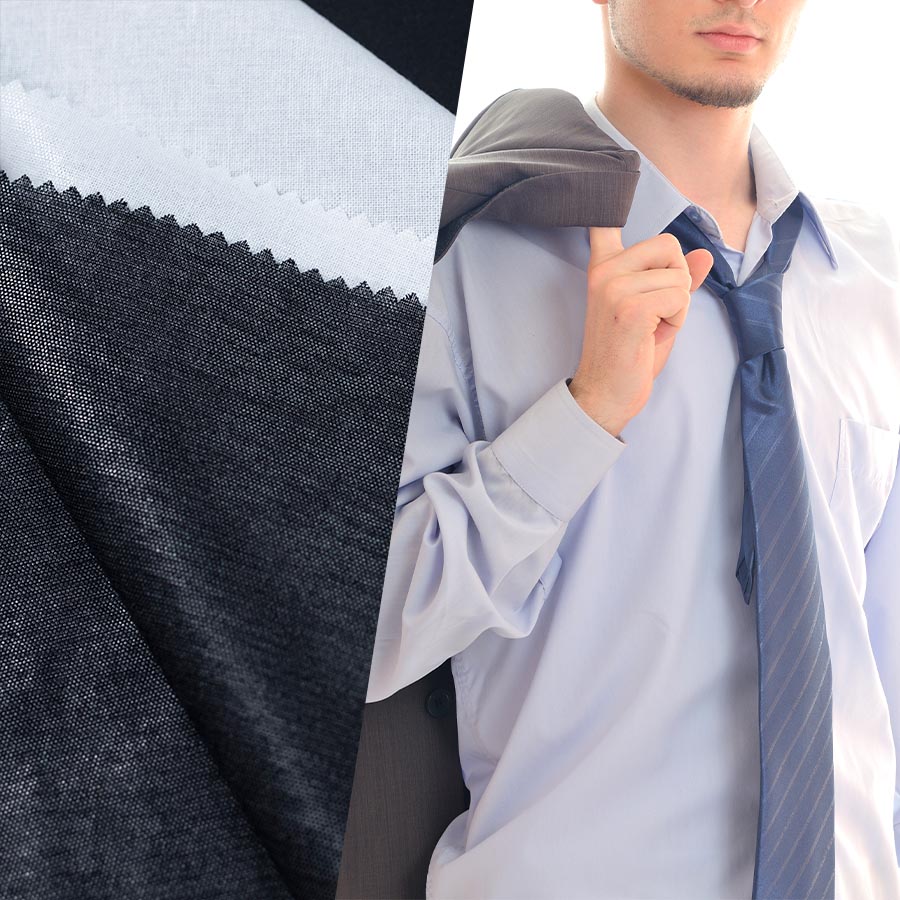
Why Do Some Shirts Lose Their Shape After Washing?
A new shirt usually looks crisp.
The collar stands well.
The cuffs stay flat.
The front placket looks straight.
But after several washes, some shirts begin to change.
The collar becomes soft.
The cuffs wrinkle more easily.
The front placket no longer stays straight.
Many buyers first think the fabric is the problem.
In our experience, that is not always true.
The support material inside the shirt often has a much bigger influence.
That support material is called shirt interfacing.
Choosing the right one helps the shirt keep its appearance from the first wear to the last.
What Is Shirt Interfacing?
Shirt interfacing is a support material used in specific parts of a shirt.
Unlike the outer fabric, it is hidden inside the garment.
Its job is simple.
It strengthens areas that receive frequent movement while helping the shirt maintain a clean appearance.
Most commonly, shirt interfacing is used in:
- collars
- collar stands
- cuffs
- front plackets
Without interfacing, these parts can become soft and unstable much faster.
What Makes a Good Shirt Interfacing?
Many buyers ask for “good quality.”
But good quality does not always mean the same thing.
The right shirt interfacing should match the fabric, the garment style, and the customer’s expectations.
From our experience, buyers usually focus on four things.
Shape Retention
A collar should remain neat after wearing and washing.
Interfacing helps provide that stability.
Comfortable Hand Feel
Customers touch the collar every time they wear the shirt.
If it feels too stiff, the shirt becomes uncomfortable.
If it is too soft, it loses structure.
Finding the right balance is important.
Reliable Bonding
For fusible shirt interfacing, stable bonding is essential.
Poor bonding may lead to bubbling or edge lifting after washing.
Sample testing before production is always recommended.
Washing Performance
Most shirts are washed frequently.
The interfacing should continue performing after repeated washing.
This is one of the first things many garment brands evaluate.
Common Types of Shirt Interfacing
Different shirt styles require different solutions.
| Type | Characteristics | Typical Applications |
|---|---|---|
| Woven Shirt Interfacing | Natural hand feel and stable support | Business shirts |
| Knit Shirt Interfacing | Flexible with slight stretch | Casual shirts |
| Nonwoven Shirt Interfacing | Economical and easy to process | Everyday shirts |
| Collar Interfacing | Designed for collar construction | Dress shirts |
There is no single “best” option.
The choice depends on the shirt being produced.
How to Select the Right Shirt Interfacing
Every shirt project is different.
Before selecting an interfacing, it helps to answer a few practical questions.
What Fabric Is Being Used?
A lightweight cotton shirt and a heavy flannel shirt do not require the same support.
The interfacing should match the fabric weight.
What Style Is the Shirt?
Formal business shirts often require a cleaner collar.
Casual shirts usually feel better with softer support.
How Will the Shirt Be Washed?
Industrial laundry, home washing, and dry cleaning create different conditions.
Testing under actual washing conditions gives the most reliable results.
What Does the Customer Expect?
Some brands prefer crisp collars.
Others prefer a softer look.
Understanding the final product helps determine the correct specification.
Common Buying Mistakes
Over the years, we have seen several problems appear repeatedly.
Choosing Only by Price
A lower-cost interfacing may increase quality complaints later.
Using One Specification for Every Shirt
Different fabrics behave differently.
Using one specification for every collection rarely produces the best result.
Skipping Wash Tests
Many issues only appear after laundering.
Sample testing should be part of every development process.
Ignoring Fabric Compatibility
Even high-quality interfacing performs poorly if it does not match the fabric.
Questions Buyers Often Ask
Can knit shirt interfacing be used for formal shirts?
Yes, but the choice depends on the desired collar appearance and fabric characteristics.
Does heavier interfacing always make a better collar?
No. Too much stiffness can reduce comfort and affect appearance.
Should shirt interfacing always be fusible?
Not necessarily. Both fusible and sew-in constructions are available depending on production requirements.
How can I reduce bubbling after washing?
Correct fusing conditions and proper sample testing are the best starting points.
Can specifications be customized?
Yes. Width, weight, coating, and color can usually be adjusted for different garment projects.
Why Choose UNT?
At UNT, we have supplied interlining materials for garment manufacturers for more than ten years.
We understand that shirt production is not only about fabric.
The right interfacing affects appearance, comfort, production efficiency, and customer satisfaction.
We support customers with:
- Woven, knit, and nonwoven shirt interfacing
- Stable quality from sampling to bulk production
- Technical support for product selection
- OEM and customized specifications
- Reliable international delivery
Rather than recommending one product for every shirt, we help customers choose the solution that best matches their garment.
Contact Us
Shanghai Uneed Textile Co., Ltd
TEL: +86-21-33608891
FAX: +86-21-33608892
Email: info@uneed-tex.com
continue reading
Related Posts

Fluorescence testing for interlining checks fluorescent whitening agents and helps buyers meet garment quality requirements.
-
Interlining for wool coats should add shape without making the fabric stiff. Compare woven, napped, and hair interlining options.
-
Microdot fusible interlinings use fine adhesive dots for smooth bonding, soft hand feel, and clean garment appearance.
.png)