
What Is Canvas Interlining and Why Is It Important?
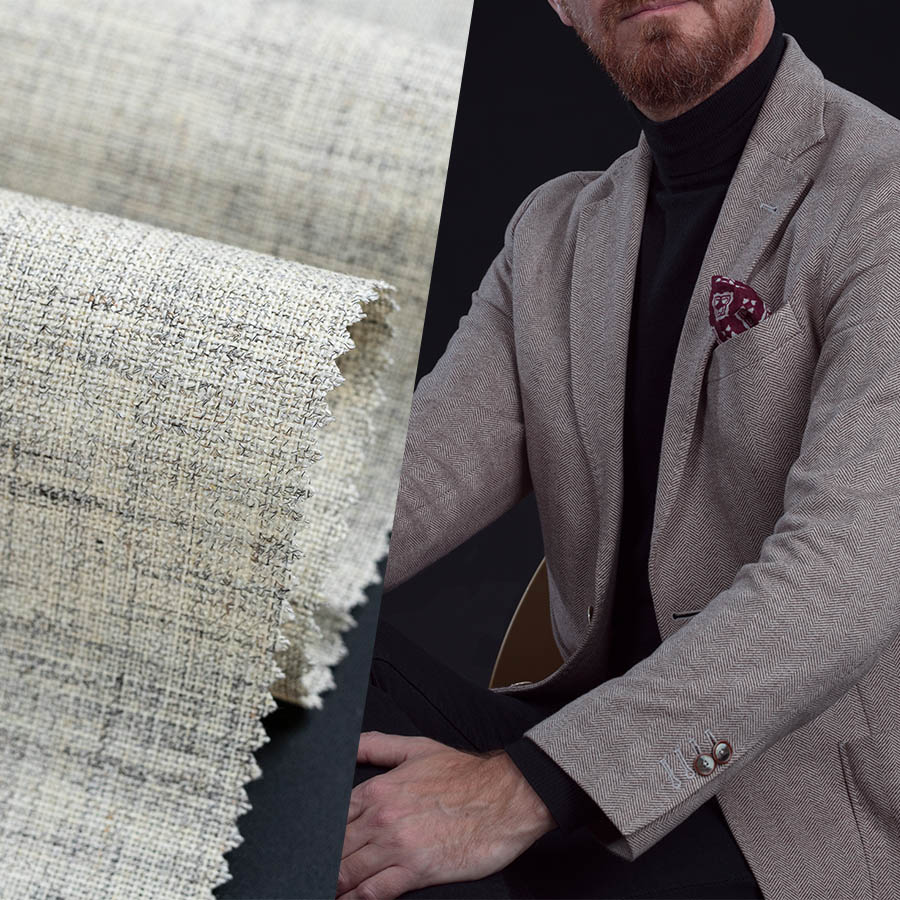
A tailored jacket needs more than outer fabric and lining.
The chest needs shape. The lapel should roll naturally. The front should stay clean without feeling like a hard board.
This is where Canvas Interlining is used.
It sits inside the garment and helps build structure through the chest, front, and lapel areas. Unlike ordinary fusible interlining, canvas is commonly sewn into the garment rather than fully bonded to the shell fabric.
For suits, blazers, and tailored coats, this difference can have a major effect on how the finished garment looks and moves.
What Is Canvas Interlining?
Canvas interlining is a woven support fabric used inside structured garments.
In tailoring, the term often refers to hair canvas or hair interlining. Different constructions can use cotton yarns together with hair fibers and other blended materials.
The exact composition depends on the required stiffness, weight, and garment style.
Its purpose is to provide support while allowing the outer fabric to keep a more natural drape.
Typical applications include:
- Suit jackets
- Blazers
- Tailored coats
- Formal jackets
- Structured garment fronts
It is especially important around the chest and lapel, where shape needs to be controlled without making the garment completely rigid.
Why Is Canvas Interlining Important?
A suit jacket is not flat.
The chest has volume. The lapel rolls outward. The front needs to keep its shape when the wearer moves.
The shell fabric alone may not be able to maintain this structure.
Canvas interlining adds internal support so the garment can hold the intended shape.
It Supports the Jacket Front
The front of a tailored jacket needs enough body to remain smooth.
Without enough support, the fabric may collapse or wrinkle more easily.
It Helps Form the Lapel
The lapel is an important visual part of a suit.
Canvas helps support the roll and shape of the lapel instead of forcing it into a completely flat position.
It Allows More Natural Movement
A sew-in canvas is not bonded across the entire surface of the outer fabric.
This allows the shell fabric and internal structure to move more independently.
For tailored garments, this can create a softer and more natural feel.
Where Is Canvas Used in a Suit?
The amount of canvas depends on how the jacket is constructed.
| Suit Construction | Canvas Use | Main Character |
|---|---|---|
| Fully Fused | Little or no main canvas structure | Efficient mass production |
| Half Canvas | Mainly chest and upper front | Balance of structure and production efficiency |
| Full Canvas | Extends through much of the jacket front | Traditional tailored construction |
Half Canvas
In a half-canvas jacket, canvas is mainly used through the upper front and chest.
Other areas may use fusible interlining.
This gives the important chest and lapel areas more natural structure while keeping production practical.
Full Canvas
In full-canvas construction, the canvas extends further down the jacket front.
It becomes a major part of the internal structure.
This construction requires more tailoring work and careful matching between the canvas and shell fabric.
Canvas Interlining vs Fusible Interlining
These two products do not work in exactly the same way.
Fusible interlining uses hot melt adhesive to bond directly to the outer fabric.
Canvas is normally sewn into the garment.
| Feature | Canvas Interlining | Fusible Interlining |
|---|---|---|
| Attachment | Mainly sew-in | Heat bonded |
| Structure | Woven canvas construction | Woven, knit, or nonwoven base |
| Movement | More independent from shell fabric | Bonded directly to shell |
| Production | More tailoring work | Faster production |
| Typical Use | Suits, blazers, tailored coats | Shirts, jackets, coats and general garments |
Neither one is automatically better.
The correct choice depends on the garment design, production method, target price, and required hand feel.
Some suits also use both types in different areas.
How Do You Choose the Right Canvas Interlining?
Choosing only by GSM is not enough.
Several points should be checked together.
Weight
The canvas should match the weight of the outer fabric.
A heavy canvas can overpower a lightweight suit fabric, while a very light canvas may not provide enough support for a heavier coat.
Firmness
Different garments need different levels of structure.
A formal business suit may need firmer support than a soft casual blazer.
Thickness
Too much thickness can make the chest area bulky.
The canvas should provide structure without creating unnecessary volume.
Material and Construction
Different yarn and fiber combinations affect the hand feel and behavior of the canvas.
If the buyer already has an approved material, sending a physical sample is often the easiest way to match the required result.
Garment Design
A full-canvas suit and a half-canvas suit do not require exactly the same material or quantity.
The supplier should know how the canvas will be used before recommending a specification.
What Should Be Tested?
Because canvas is part of the internal structure, buyers should not judge it only by appearance.
Important checks include:
- GSM and width
- Tensile strength
- Breaking strength
- Shrinkage
- Dimensional stability
- Elongation
- Stiffness
- Hand feel
- Shape recovery
- Fluorescence
It is also useful to evaluate the material inside an actual jacket panel.
A small fabric sample can show weight and hand feel, but a garment test gives a better idea of how the chest and lapel will behave.
Common Problems When Selecting Canvas
The Jacket Feels Too Hard
The canvas may be too firm or too heavy for the shell fabric.
The Chest Looks Bulky
The selected canvas may be too thick, or too many internal layers may be used.
The Lapel Does Not Roll Naturally
The canvas construction or firmness may not match the jacket design.
The Outer Fabric and Canvas Behave Differently
Different shrinkage or dimensional stability can affect the finished jacket.
Testing before bulk production helps reduce this risk.
Common Questions About Canvas Interlining
Is canvas interlining the same as hair canvas?
In tailored garment production, the terms often refer to the same or closely related category of woven sew-in interlining.
Is canvas only used in suits?
No. It can also be used in blazers, tailored coats, and other structured garments.
Is canvas interlining fusible?
Traditional canvas is mainly sew-in, although fusible materials may be used together with canvas in some jacket constructions.
Is heavier canvas always better?
No. The canvas should match the outer fabric and required jacket structure.
Can canvas interlining be customized?
Yes. Material composition, GSM, width, color, firmness, hand feel, roll length, labels, and packaging can be adjusted according to the order.
Why Choose UNT for Canvas Interlining?
UNT has more than 10 years of experience supplying hair canvas and canvas interlining for suits, blazers, and tailored coats.
Our production covers hair interlining weaving, finishing, width setting, rolling, inspection, and packing. OEM and ODM specifications are available for different weights, widths, materials, colors, and hand feels.
Testing can include tensile strength, breaking strength, shrinkage, dimensional stability, stiffness, shape recovery, GSM, width, and fluorescence.
- Samples: normally within 3 days
- Stock orders: normally 3–7 days
- Customized orders: normally 7–15 days
- OEKO: SH001 285226
- GRS: BVC-TE-00011147-GRS-2602-50007497-V1.0
Certificate applicability can be confirmed according to the specific product.
Contact Us
Shanghai Uneed Textile Co., Ltd
TEL: +86-21-33608891
FAX: +86-21-33608892
Email: info@uneed-tex.com
continue reading
Related Posts

Fluorescence testing for interlining checks fluorescent whitening agents and helps buyers meet garment quality requirements.
-
Interlining for wool coats should add shape without making the fabric stiff. Compare woven, napped, and hair interlining options.
-
Microdot fusible interlinings use fine adhesive dots for smooth bonding, soft hand feel, and clean garment appearance.
.png)