
What Is Double Sided Interfacing and How Is It Used?
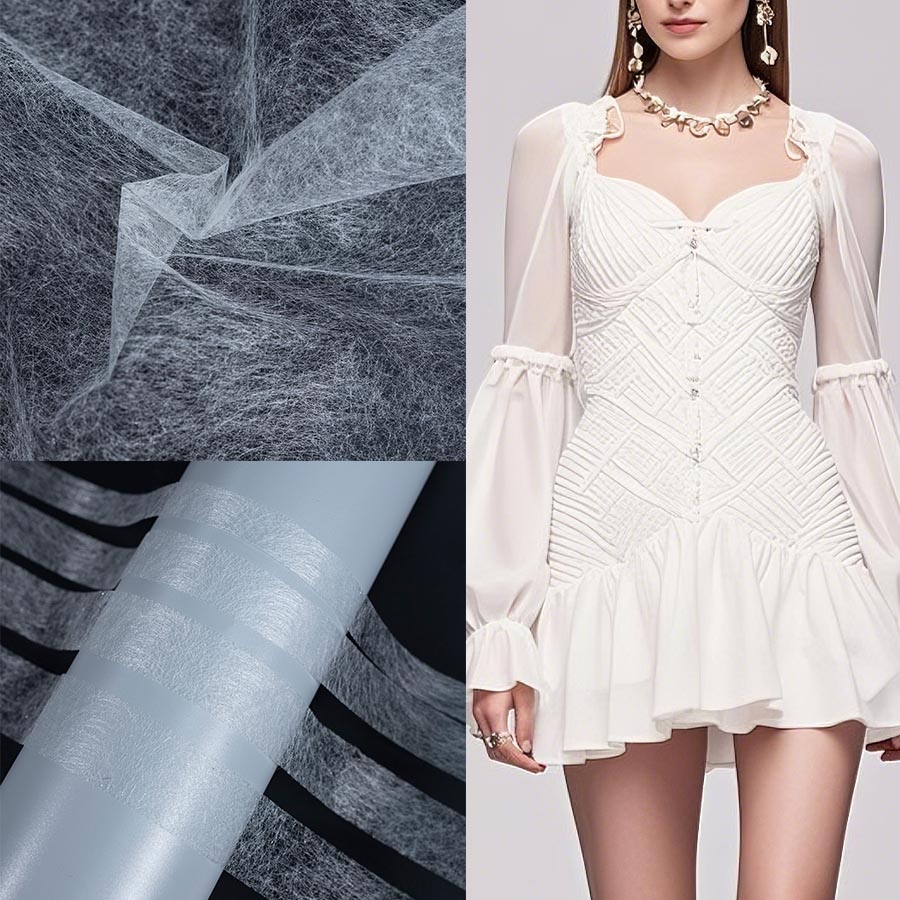
When buyers search for double sided interfacing, many are not looking for traditional garment support.
They are usually looking for a way to bond two materials together.
That’s an important difference.
In many garment factories, this product actually refers to hot melt adhesive web—a double-sided bonding material used between two fabrics.
It is not a regular interfacing.
Its main job is adhesion.
What Is Double Sided Interfacing?
Double sided interfacing is a bonding material designed to stick two layers together.
In most cases, this means hot melt adhesive web.
It is made as a thin web-like adhesive layer.
After heat and pressure, it melts and bonds both sides.
That creates:
- clean bonding
- no visible stitching
- better production efficiency
That’s why it is widely used in modern garment manufacturing.
Is It the Same as Double-Coated Interfacing?
No.
This is where confusion happens.
Double sided interfacing (hot melt adhesive web):
- adhesive in the middle
- bonds two materials together
- mainly for lamination
Double-coated interfacing:
- base fabric with adhesive coating
- used as regular fusible interfacing
- mainly for garment support
They are different products.
Why Do Buyers Choose Double Sided Interfacing?
Usually for one reason:
they want bonding, not stitching.
1. Cleaner Appearance
No stitching lines.
This is useful in:
- premium garments
- seamless designs
- hidden construction
2. Faster Production
Bonding can reduce sewing steps.
That often improves production efficiency.
3. Better Flexibility
Compared with some tapes or films, adhesive web often keeps the bonded area softer.
That helps preserve garment comfort.
Where Is Double Sided Interfacing Used?
It is widely used in apparel and textile bonding.
Common applications:
- hem bonding
- collar bonding
- cuff bonding
- seam sealing support
- fabric lamination
Also used in:
- embroidery applications
- footwear materials
- bag materials
- home textiles
👉 Simple rule:
if two materials need to stick together, this product may help
Types of Hot Melt Adhesive Web
Different materials are used for different applications.
Common types include:
- PA (Polyamide)
- PES (Polyester)
- EVA
- TPU
- PO
Each offers different:
- melting temperature
- softness
- wash resistance
- bonding strength
Choosing the right type matters.
Double Sided Interfacing vs Sewing
A common buyer question.
| Feature | Double Sided Interfacing | Traditional Sewing |
|---|---|---|
| Appearance | Cleaner | Visible stitches |
| Production Speed | Faster | Slower |
| Flexibility | Softer | Depends on thread |
| Strength | Good | High |
| Best Use | Hidden bonding | Structural seams |
How to Choose the Right Double Sided Interfacing?
Buyers usually focus on three things.
1. Fabric Type
Different fabrics need different adhesive systems.
Cotton and polyester may need different solutions.
2. Bonding Temperature
Always confirm your production temperature.
Wrong temperature causes poor bonding.
3. Washing Requirement
Some applications need:
- dry cleaning resistance
- washing resistance
- high durability
Choose accordingly.
Common Problems Buyers Run Into
1. Using the Wrong Adhesive Type
Not all adhesive webs work on all fabrics.
2. Too Much Heat
Overheating can damage fabric.
3. Skipping Sample Testing
Always test before bulk production.
Bonding performance can vary.
FAQ
1. What is double sided interfacing?
It usually refers to hot melt adhesive web used for bonding fabrics.
2. Is it the same as hot melt adhesive web?
Yes, in many garment applications.
3. Is it used for support?
Not mainly. Its main purpose is bonding.
4. Does it replace sewing?
In some applications, yes.
5. Is it washable?
Yes, depending on material type.
6. Can it be used on all fabrics?
No, compatibility testing is important.
7. Is it visible after bonding?
Usually no.
8. How do I choose the right type?
Based on fabric, temperature, and durability needs.
Why Choose UNT (Shanghai Uneed Textile Co., Ltd)?
For adhesive web products, consistency matters.
Small differences in melting behavior can cause production problems.
At UNT, we help customers choose the right bonding solution.
- Over 10 years of experience in interlining and garment materials
- Full range of hot melt adhesive web products
- Sample testing support
- Stable production quality
- Reliable export and delivery
We focus on practical bonding performance, not just specifications.
Contact Us
Shanghai Uneed Textile Co., Ltd
TEL: +86-21-33608891
FAX: +86-21-33608892
Email: info@uneed-tex.com
continue reading
Related Posts

Fluorescence testing for interlining checks fluorescent whitening agents and helps buyers meet garment quality requirements.
-
Interlining for wool coats should add shape without making the fabric stiff. Compare woven, napped, and hair interlining options.
-
Microdot fusible interlinings use fine adhesive dots for smooth bonding, soft hand feel, and clean garment appearance.
.png)